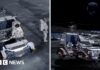



Dust oceans. Quicksand traps. Before Armstrong planted the boot print, everyone assumed the moon would swallow the lander whole. It would have been a historic disaster. The space program might have died right then.
Radio astronomy saved it. Not by landing. By listening. By bouncing light off the surface and studying what bounced back, scientists knew the ground was solid. Emma Chapman, an astrophysician at the University of Nottingham, calls it the true first contact. In her upcoming book The Echoing Universe (2026), she argues we already knew the way before the rockets launched.
“It would have been one of the most anticlistactic and horrific moments in history.”
Now Chapman looks outward. Not just to the moon, but to the messy, invisible universe filled with radio noise. We sat down to talk about that noise, the quiet dark of deep space, and the odds of someone calling us back.
What if you had radio eyes?
Ask Emma Chapman to describe the sky in radio waves.
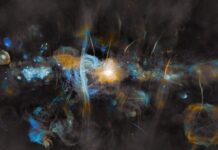
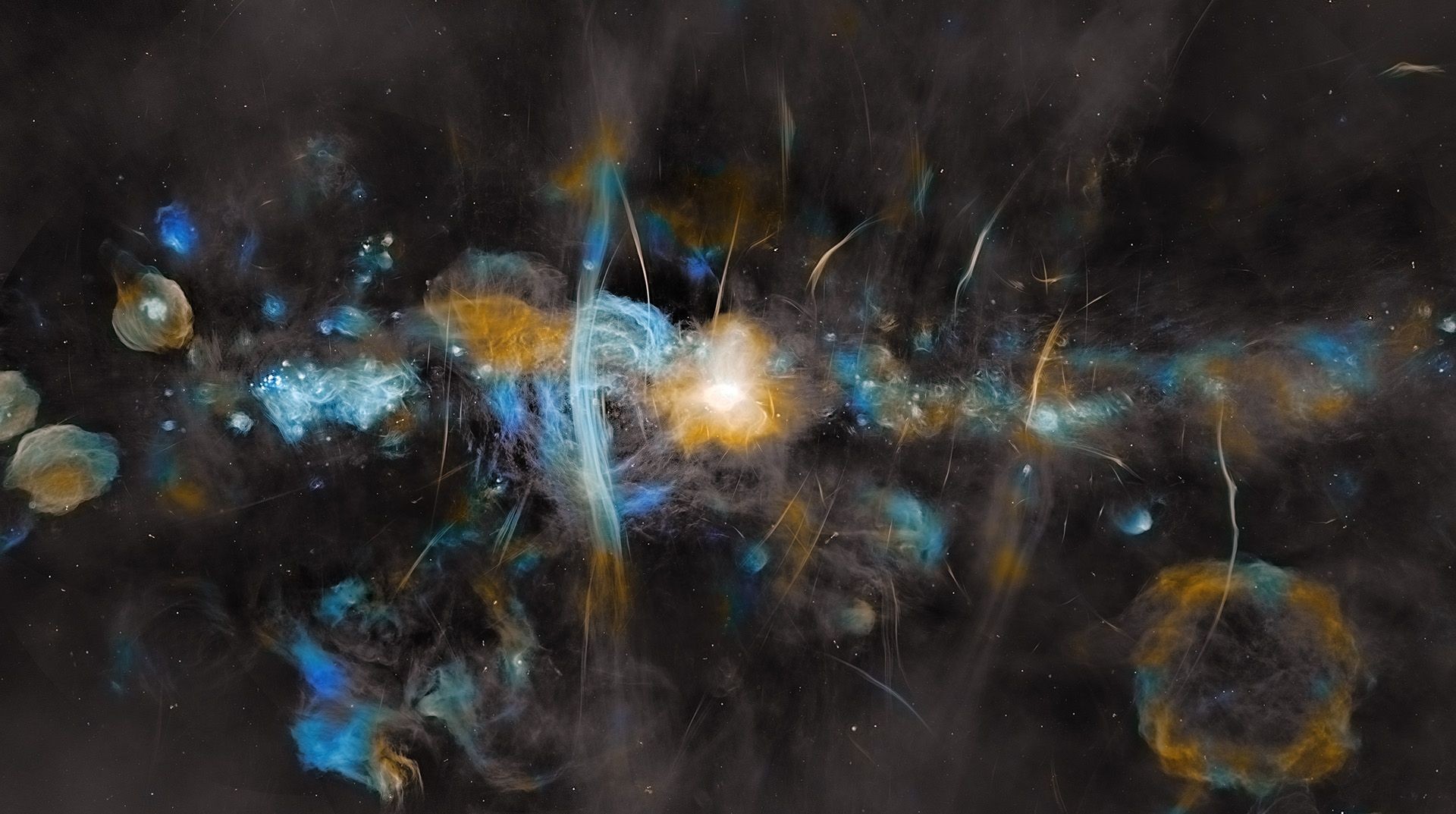
She says the sun disappears. The moon stays full. The galaxy becomes a blinding swath of light, brighter than the Milky Way on a dark night. But it is not stars. It is gas.
Think of a black sheet of paper with pinholes letting in light. That is optical vision. The pinholes are the stars. Radio vision flips the script. You see the sheet itself. You see the scaffolding. Magnetic field lines stretch out. You see runaway stars kicking out of their solar systems, dragging trails behind them like comets, but in radio frequency. You see the expanding shells of dead supernovae.
Day or night? Doesn’t matter. Radio astronomy does not care about the sun.
The moon is getting noisy
Why put a telescope on the far side? Because Earth is screaming.
Decades of radio emissions. Starlink. Wi-Fi. Text messages. It all leaks into space. Chapman admits that if she had radio eyes, her room would be horrifying. “Thank God nobody can sense these things.” The signals just pass through.
The far side of the moon offers the quietest corner of the solar system. We need that quiet. Radio waves from the early universe are faint. We need to hear them before they vanish under the noise of human technology.
Chapman has a plan. No huge metal dish like Arecibo, which collapsed in 2020. Instead, lightweight boxes. Autopilot landings at the edge of a crater. Copper wires unfurling into the dust. The crater becomes the dish. Nature builds the structure. We just add the antenna.
It is feasible. Cheap. Probably happens within a decade.
Artemis and underground scans
We send probes. Probes call home. Relays orbit the moon, amplifying signals, broadcasting back to Earth.
It is bloody noisy.
Like having a news broadcast antenna in your backyard. Every landing adds noise. China, India, the US, private firms. The moon is becoming crowded. Chapman is not against satellite constellations entirely. Starlink equalizes Wi-Fi access. It is a good thing. But do we need a million satellites? Do we need ten different companies competing in low Earth orbit?
It causes damage. Environmental damage, even in space.
We treat space as infinite. It is not. We need sustainability. We need ethics. She accepts some data loss for exploration, but not everything. We have to balance profit with preservation.
“We’re balancing it, just as we need to balance profiteering on Earth.”
Radio radar helps here. It digs. It scans lava tubes under the lunar surface. It finds caves. Safe spots for humans to hide when solar storms hit. Artemis IV will need these maps. Now. Before people go.
Waiting for the call
SETI is a game of patience. Scientists scan wavelengths, looking for a spike that isn’t noise. It relies on an external party. An alien civilization deciding to shout, or simply leaking power into the void.
Chapman is optimistic. Not because we have found them. But because physics is universal. Every star has planets. The habitable zone is wider than we thought. Life wants to communicate. How? Radio waves. They escape atmospheres easily. They travel forever.
We leak radio too. Television signals from the 1950s are still drifting through space. Someone could catch them if their antenna were powerful enough. It does not require intent. It just requires power.
Do they visit?
Absolutely not.
No respected researcher believes in visitation. Physics forbids warp drives. Energy requirements are too high. Stars everywhere output similar energy. No easy shortcuts. They will not rock up unannounced. They are too far.
The long-distance pen pal
Say we get a signal. Confirmed. Alien. Intelligent.
From 70 light years away.
They sent it 70 years ago. Our reply takes 70 years to arrive. This is not a first date. This is pen palship. One message per generation.
Would you riot? Panic? Call your partner? Chapman shrugs. It depends on your day.
Science communicators bear a burden here. People will expect Mars Attacks. Invasion fleets. Doom. The reality is quieter. Slower. We might ask if they have solved nuclear fusion. We have an energy crisis. We wait seventy years for an answer.
“Oh, we hadn’t actually worked that out. Thanks.”
That would be nice.