

Family ties. Not just crops. That’s what saved them.
A new study in Nature pulls together more than two thousand years of history in Argentina’s Uspallatal Valley. It sits right on the southern edge where Andean farming reached its limit. We thought we knew how agriculture spread. We didn’t.
Researchers dug deep. Literally and genetically. They combined ancient DNA, isotope data, and climate records with close cooperation from the local Huarpe Indigenous people. The result? It flips the script. Hunter-gatherers didn’t get pushed out or wiped clean. They slowly started farming themselves.
Farming Adopted, Not Imposed
The big question has always been the same. Did farmers move in? Or did locals pick up the skills? Archaeology usually can’t tell. Farming villages look like farming villages, regardless of who built them. But this valley is different. Farming arrived here late. That gave scientists a rare chance to see the switch happen in real-time.
The Microbial Paleogenomics Unit led the charge. They sequenced DNA from 46 people spanning centuries. The genetic link? Unbroken. The hunter-gatherers from 2,200 years back were the ancestors of the maize farmers a thousand years later.
There was no great replacement. Just adaptation.
“We are filling a gap… proving a deep divergence and current persistence in the region,” says co-author Pierre Luisi.
This matters. It punches holes in the narrative that indigenous lines vanished when the modern Argentine state took shape. The genetics are still there. Hidden but persistent.
Maize and Migrants
Diet tells a story too. Isotopes from teeth and bones showed how people ate. Carbon and nitrogen for food sources. Strontium for origins.
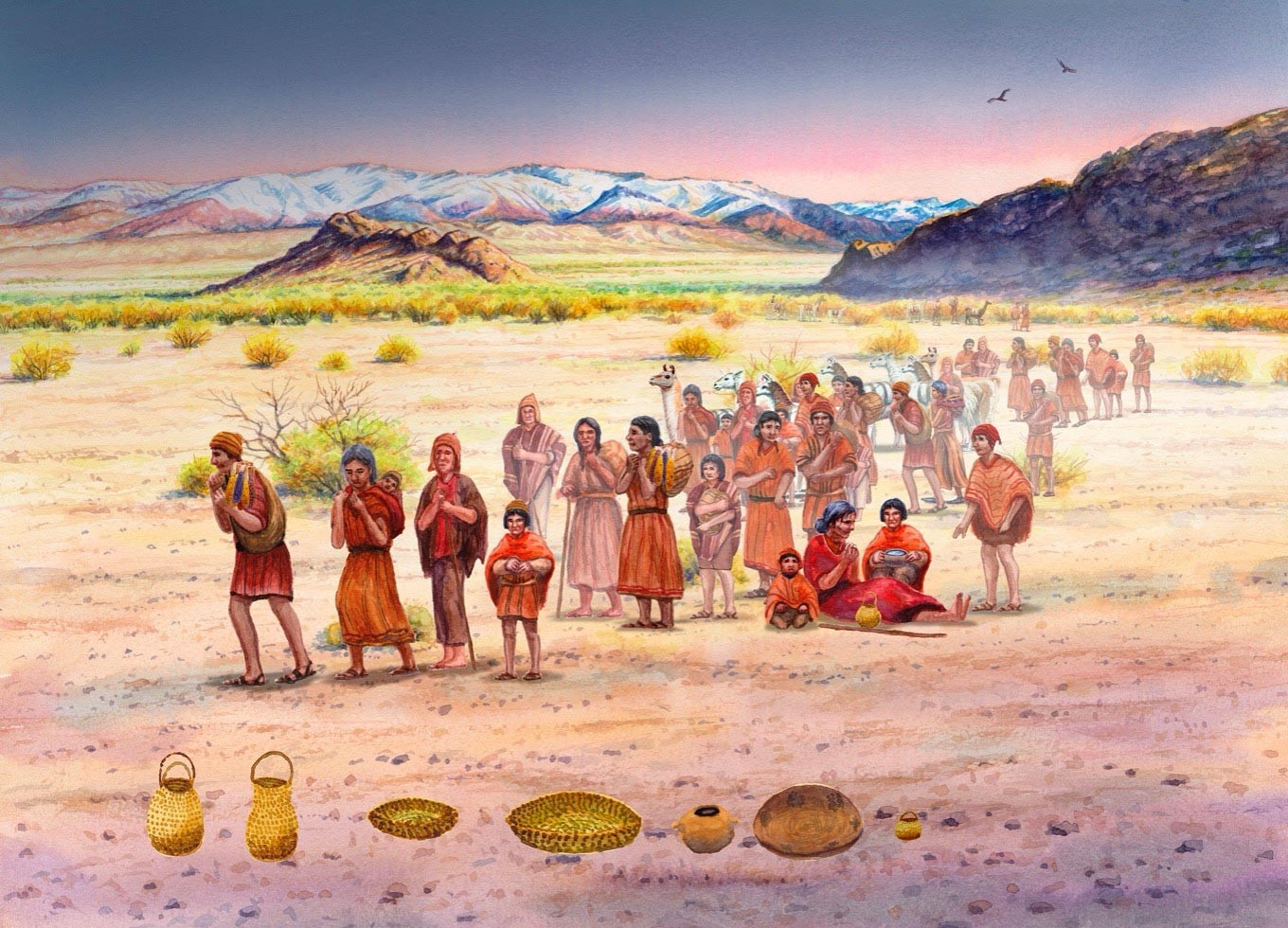
For a long time, the approach was flexible. They ate maize but didn’t depend on it completely. Then, around 800 to 600 years ago, things shifted at the Potrero Las Colonias cemetery. Suddenly, maize consumption spiked. High levels. Some of the highest seen in the entire southern Andes.
Who were these heavy maize eaters? They weren’t from the area.
Their strontium signatures marked them as migrants. But not outsiders in the true sense. The genetic data shows they were relatives. Cousins, siblings, maybe grandparents. They moved through the network, not across a border into enemy territory.
Still. It didn’t go well.
The genomic record shows a brutal drop in population size. A long, dragging decline. Stress wasn’t just a phase. It was generations.
The Triple Threat
Why did things fall apart? It was everything.
The climate went unstable. Long periods of unpredictability hit just as the population peaked. The bones show children starving. Infectious diseases racked up tolls.
Then came the tubers. Specifically, tuberculosis.
DNA proved it. A strain known from pre-contact times. Finding it this far south—past Peru and Colombia—shocks the map. It means the disease traveled farther and deeper than anyone thought.
“It expands the geographic frame,” says Nicolás Rascovan of Institut Pasteur.
Tuberculosis isn’t new to South America. But seeing it in the heart of the southern Andean crisis highlights how environmental pressure cooks pot for pathogens. When you are starving, crowded, and moving, sickness takes root.
Blood Lines as a Lifeline
So why did some survive?
Look at who moved. The migrants were close kin. Buried at different times but genetically linked. This wasn’t random scattering. It was organized. Multi-generational.
And the lines of connection ran through mothers. Maternal lineages dominated the migrant group. One specific mitochondrial lineage popped up again and again. Women didn’t just keep families together; they orchestrated the movement. They maintained the network when the world got dangerous.
Was there violence? No signs.
In fact, migrants and locals shared burial spaces. They coexisted.
“No farming community abandons fields lightly,” says Ramiro Barberena, an archaeologist involved in the study. “People move under force majeure.”
They relied on each other. Blood became a buffer against famine and disease.
Who Decides History?
This research didn’t happen in a vacuum. The Huarpe community co-authored it. Three of their members helped shape the findings, the permissions, and the translation.
Archaeology is rarely neutral when it deals with dead relatives of the living. Rascovan admits this. Working with the community changes the questions you ask. It forces humility. It dictates how you tell the story of ancestors you might claim as your own.
The study suggests a hard truth. Farming wasn’t a one-way ticket to prosperity. It was a high-wire act. Balancing on shifting climates and spreading disease.
We see ourselves in them. The migration. The stress. The reliance on family networks when institutions fail. Maybe we’re still navigating that same crisis, just with different crops and different diseases.
What else are we missing in the bone dust?