




Stop looking at birds as just background noise. Some of them are quietly solving problems that would stump a toddler. The gap between avian smarts and primate-level cognition is shrinking fast, and it’s forcing us to rewrite the textbook on what it means to be smart.
We’ve known for a while that bird brains aren’t just empty shells. Parrots, crows, and jays aren’t parrots just repeating what they hear because it’s fun. They’re using language as a tool. They navigate social labyrinths, solve multi-step puzzles, and grasp abstract ideas. This isn’t mimicry. It’s communication with intent.
How African Grey Parrots Use Language to Solve Problems
Let’s talk about the African Grey. These birds are the heavyweights of the avian world when it comes to cognitive function. They don’t just talk. They think in words.
Research shows these parrots can understand the meaning behind the sounds they make. They use specific calls to label objects, express desires, or even describe their own feelings. It’s not random. It’s structured.
Dr. Irene Pepperberg’s work with a parrot named Alex revealed something startling. Alex didn’t just echo. He asked for things he wanted. He identified colors, shapes, and materials. He understood the concept of “zero.” He could look at a set of objects and tell you how many there were, even if the number was none.
“Birds are not just repeating sounds. They are using language to negotiate, to problem-solve, and to interact with their world in meaningful ways.”
This kind of intelligence forces a hard question: Why did we think only mammals could handle abstract reasoning? The answer is simple. We were wrong. African Greys demonstrate that complex thought doesn’t require a large neocortex. It requires a different kind of brain architecture—one that packs neurons densely into a smaller space.
Their ability to use language for more than just survival is key. They use it to socialize. To bond. To manipulate. To learn. This changes how we view animal consciousness. It’s not about having a human-like brain. It’s about having a brain that works differently, but reaches the same destination.
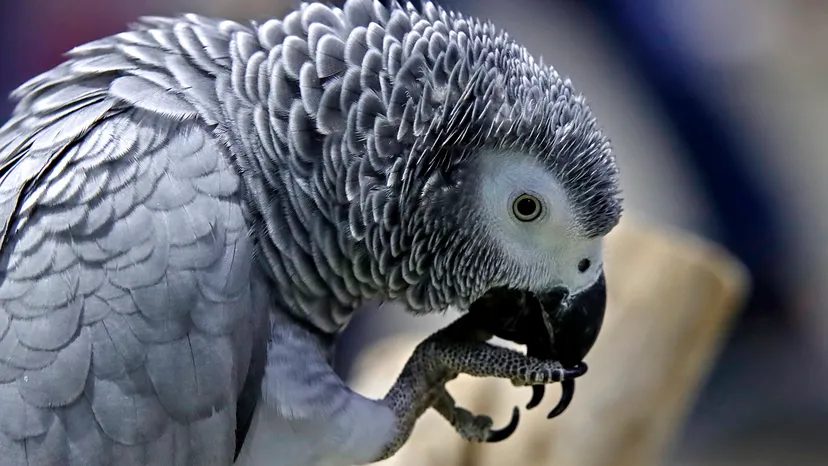
African greys aren’t just repeating what they hear. They are parsing language. Take Alex, the famous subject who proved birds could grasp abstract concepts like “same” and “different.” That is a mental leap few non-mammals make. These birds show cognitive flexibility. If one tactic fails, they switch. It mirrors the adaptability seen in great apes. They also learn by watching. Observation beats trial and error for them. This sets the stage for understanding how other species handle complex problems.
How Crows Engineer Solutions in the Wild
New Caledonian crows take tool use to a level that feels almost human. They don’t just pick up a stick. They shape it. They carve hooks to extract food from crevices. This requires understanding cause and effect. It requires logical sequencing.
The real kicker? Meta-tool use. Some crows use one tool to retrieve another tool, which they then use to get food. It is a multi-step plan executed in real time. This places them in the same intellectual tier as chimpanzees. In controlled studies, these birds solved puzzles requiring a specific order of tool usage. They didn’t guess. They planned.
“Some crows have even been observed using a tool to get another tool, which they then use to access food.”
This isn’t instinct alone. It is active problem solving. The bird identifies a barrier. It assesses available materials. It modifies those materials. Then it executes the plan.
Western Scrub Jays Plan for Tomorrow
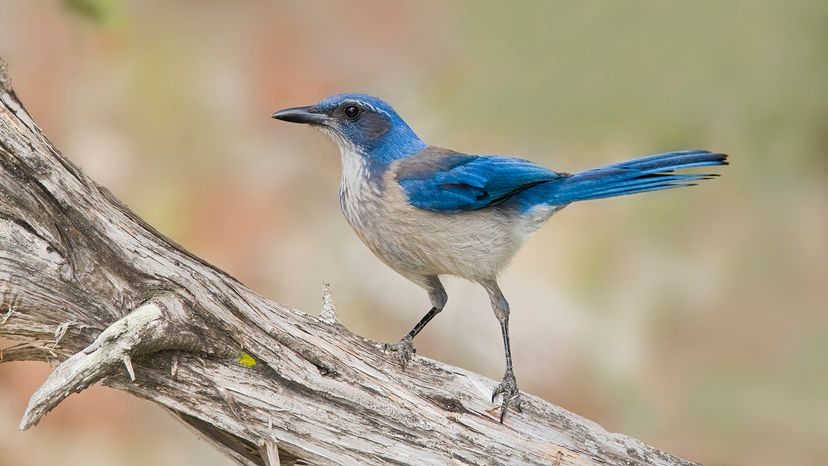
If crows engineer tools, Western scrub jays plan for the future. They remember what they hid. More importantly, they remember where they hid it. They also remember when they hid it.
In experiments, jays were given two types of food. One type, like insects, spoils quickly. The other, like peanuts, lasts longer. The birds were allowed to hide food in the morning. In the afternoon, the perishable items were gone. The jays didn’t just scramble for leftovers. They sought out the non-perishable items they had hidden earlier, or they hid new ones.
They anticipated a future hunger. They acted on a memory of a past event to satisfy a future need. This mental time travel is rare. It suggests a sophisticated understanding of cause, time, and self.
4. Dolphins and the Art of Social Strategy
Move from trees to water. Bottlenose dolphins display social intelligence that rivals primates. They use signature whistles. Each dolphin has a unique name. They call out to one another by name.
But the real story is in their cooperation. Dolphins coordinate hunts. They work in groups to herd fish into tight balls. They use sponges as protection for their beaks while foraging on the seafloor. This sponge-carrying behavior is cultural. It is passed from mother to offspring. It is not genetic. It is learned.
Dolphins also show self-awareness. They recognize themselves in mirrors. They understand that they are individuals distinct from the environment. This self-recognition is a prerequisite for empathy and complex social bonding.
Why Bird and Cetacean Intelligence Matters
We often reserve high intelligence for mammals. We look for faces that resemble our own. But crows, parrots,
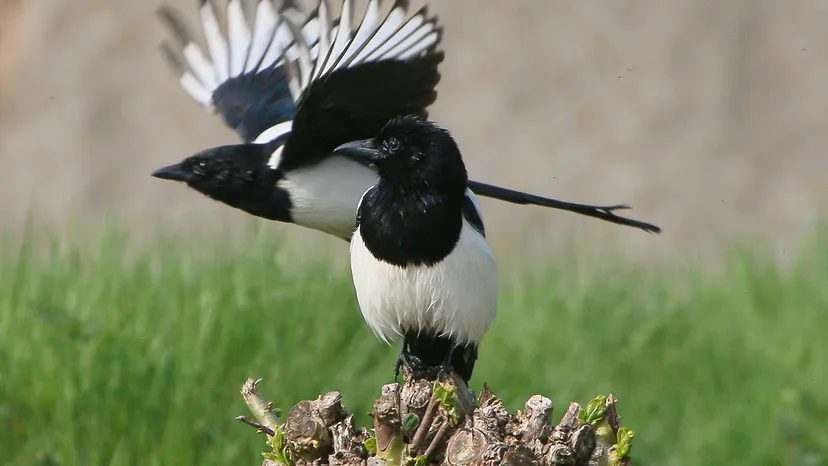
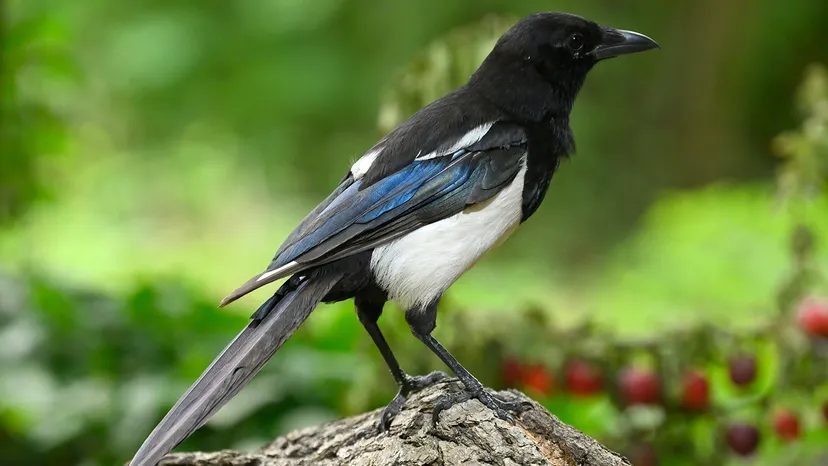
Eurasian magpies might just be the most underrated intellectuals in the avian world. You probably know them as the noisy, iridescent pests that dive-bomb pedestrians, but look closer. They are passing the mirror test, a benchmark for self-recognition that places them in a very exclusive club of species.
This isn’t just about vanity. Recognizing yourself in a reflection implies a complex internal model of the world. It suggests these birds understand that the image they see is a representation of them, not another bird. This level of self-awareness was once thought to be reserved for great apes, dolphins, and maybe elephants. Now, a corvid with a brain the size of a walnut is sitting at the table.
The test works like this: researchers place a visible mark on a bird’s head, in a spot it can only see in a mirror. If the bird uses the reflection to touch or investigate the mark, it proves it understands the link between the image and its own body. Magpies don’t just peck at the mirror in aggression. They act with purpose. They are checking themselves.
The Evolutionary Pressure of Self-Awareness
Why would evolution select for this specific trait in magpies? It likely ties back to their highly social and competitive nature. In the wild, magpies engage in complex social hierarchies and deceptive behaviors. Knowing who you are helps you navigate who they are.
This connects directly to the earlier discussion on scrub jays. Both species rely on episodic-like memory to survive. They remember specific events—where the food is, who saw them hide it—and use that data to plan. A magpie that knows it is an individual agent can better strategize against rivals. It’s not just about hiding nuts. It’s about social chess.
The implication is staggering. We used to think of intelligence as a ladder, with humans at the top. The magpie’s self-recognition suggests intelligence is a bush, with many branches reaching for different solutions to the same problems. A bird doesn’t need calculus to survive. It needs to know that its neighbor is watching, and that it can outsmart that neighbor.
Beyond the Mirror: What This Means for AI and Ethics
If magpies recognize themselves, do they have a sense of self? That’s a philosophical minefield. But practically, it forces a re-evaluation of how we treat non-human animals. The line between “instinct” and “cognition” is blurring.
Consider the technology we’re building. We are pouring resources into creating AI that can mimic human reasoning. Meanwhile, a magpie in a city park possesses a form of self-awareness we are only beginning to quantify. The hardware is different. The software, however, might be sharing fundamental code.
This doesn’t mean magpies are planning to take over. It means we are likely underestimating the cognitive load of our feathered neighbors. Every time a magpie preens, checking its reflection, it’s engaging in a mental exercise that rivals our own.
The question isn’t really whether they are smart. They are. The question is whether we are ready to accept that intelligence doesn’t look the way we expect it to. It doesn’t need a keyboard. It doesn’t need a voice. It just needs a mirror,
The Mirror Test and the Magpie Mind
Most animals look at a mirror and see a stranger. They react with aggression or curiosity, treating the reflection as another bird. The Eurasian magpie is different. It is one of the rare few species, alongside dolphins, elephants, and great apes, to pass the mirror self-recognition test. This isn’t just a parlor trick. It signals a profound level of cognitive development. It means the bird possesses a rare form of self-awareness. It knows that the bird in the glass is itself.
This awareness doesn’t exist in a vacuum. Magpies live in tight-knit, complex social groups where cooperation and competition are constant. These dynamics fuel social learning. They use a sophisticated array of vocalizations and communication methods to maintain relationships and defend territory. The stakes are high. Miscommunication can mean lost food or territory. Survival depends on reading the room.
They adapt quickly to diverse environments. This cognitive flexibility allows them to thrive where others might struggle.
Why Bird Brains Defy Size Expectations
We tend to underestimate avian intelligence. We associate brainpower with volume. But bird brains are dense. They pack neurons tightly, especially in the forebrain where higher-order thinking occurs. That dense wiring changes everything.
Birds can solve problems that seem impossible for their size. They recognize human faces. They associate specific words with meanings. Pigeons and corvids can identify objects, categorize them, and understand complex visual cues. This isn’t instinct alone. It’s active processing.
Urban areas act as mental gyms for these species. Cities force adaptation. A pigeon must navigate traffic. A crow must figure out how to open a trash bin without triggering alarms. Whether it’s cooperative hunting or tool use, the challenge is constant. Birds possess a remarkable level of intelligence that we easily overlook.
Why do we assume intelligence requires a large, wrinkled cortex? The magpie suggests otherwise. It challenges our definition of mind.
This article was created in conjunction with AI technology, then made sure it was fact-checked and edited by a HowStuffWorks editor.