




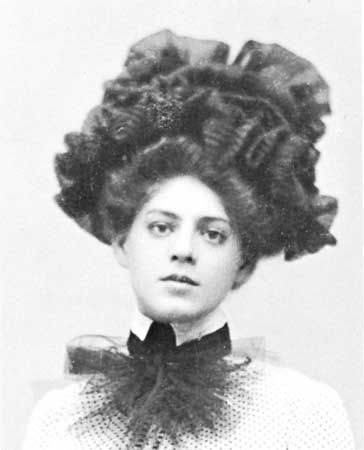
Born in Philadelphia on August 15, 1879, and passing away in Hollywood on June 18, 1959, Ethel Barrymore didn’t just act. She defined a standard. Her distinctive voice, razor-sharp wit, and commanding stage presence earned her the title of the “first lady” of American theatre. She wasn’t just a participant in the industry; she was its anchor.
The Barrymore name isn’t just a celebrity surname. It’s a dynasty. Ethel stood at the center of it, bridging the gap between the rigid conventions of 19th-century stagecraft and the emerging realism of the 20th century. While her brother John and niece Drew would later capture the Hollywood spotlight, Ethel held court on the stage for decades. She didn’t need a camera to command attention. Her voice alone could fill a theatre, carrying the weight of every syllable with precision.
Why Ethel Barrymore Matters in Hollywood History
You might know the Barrymore lineage, but how many know which member transitioned most seamlessly from classical theatre to screen? Ethel made the shift, but she kept her theatrical integrity intact. She didn’t dumb down her performance for the camera. Instead, she brought the same intensity to film that she demanded on stage. This approach influenced how future generations of actors approached their craft. It wasn’t about fitting in. It was about standing out with clarity.
Her career spanned nearly fifty years. That’s a long time in an industry known for burning bright and fast. Yet she remained relevant, not by chasing trends, but by mastering them. She understood that character acting required more than just reading lines. It required lived experience. And Ethel had plenty of that.
The Legacy of a Theatrical Icon
When people talk about the golden age of American theatre, they often forget the women who built the foundation. Ethel Barrymore was one of those women. She paved the way for others, proving that a woman’s voice could carry a production. Not just support it. Carry it. Her legacy isn’t just in the roles she played. It’s in the standard she set. A standard of excellence that still echoes today.
So next time you watch a film with a performance that feels effortless yet deeply rooted, remember her. Remember the woman who refused to compromise. Who demanded more from herself and those around her. Ethel Barrymore didn’t just act. She performed. And in doing so, she changed the game. Forever.
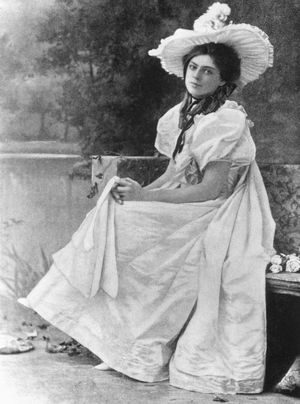
Ethel Barrymore didn’t wait for Hollywood to find her. The daughter of Maurice and Georgiana Drew Barrymore, she stepped into the spotlight on the New York City stage in 1894. Her training ground was the company run by her grandmother, the formidable Louisa Lane Drew. It was a family dynasty built on the boards.
Her breakthrough didn’t happen in America first. It came in London during the 1897–98 season. Ethel scored her first major success in The Bells and Peter the Great. Critics took notice. The stage was hers.
By 1901, she crossed the pond again to star on Broadway. The play was Captain Jinks of the Horse Marines. One role. One city. A career launched.
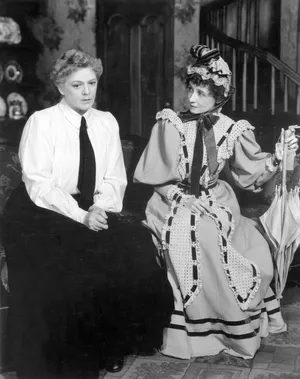
You know the name Barrymore. The dynasty runs deep in Hollywood DNA, but before the silver screen obsession took over, Ethel was already the undisputed queen of the stage. She didn’t just act; she curated an era.
Her resume reads like a masterclass in early 20th-century drama. In 1905, she brought Alice-Sit-by-the-Fire to life. By 1910, she was tackling Mid-Channel, and a year later, Trelawny of the “Wells” cemented her status. The plays kept coming. Déclassée in 1919. A revival of The Second Mrs. Tanqueray in 1924. The Constant Wife arrived in 1928. Then Scarlet Sister Mary in 1931. Whiteoaks followed in 1938. And even as the 1940s dawned, she was still commanding the boards with The Corn Is Green in 1942.
But here’s the kicker. It wasn’t enough to just star in the hits. She wanted a home base. A place with her name on the door.
Enter the Ethel Barrymore Theatre.
Opened in New York City in 1928, this venue wasn’t just a theater; it was a legacy play. It was the first Broadway house dedicated to a single actress. To mark the occasion, she starred in The Kingdom of God. It was a symbolic handover. The stage was hers. The name was hers. The power was hers.
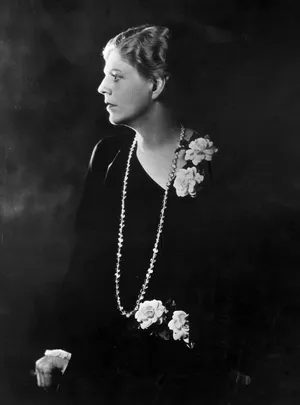
Ethel Barrymore didn’t just stick to the stage. She chased the spotlight across vaudeville circuits, radio waves, and early television screens, dabbling in motion pictures alongside her brothers Lionel and John. The Barrymores saw cinema coming and moved fast, recognizing the medium’s explosive potential while the rest of the industry was still figuring out how to focus a lens. Ethel, though. She wasn’t having it.
Her film debut came in The Nightingale back in 1914. From there, she bounced between sets in New York and the sun-drenched lots of Hollywood through 1919. It was a busy few years. But the glamour of the silver screen never clicked for her. She found the lifestyle stifling and the medium unfulfilling. So, she did what she did best: she packed up and headed back to New York City. Back to the theater. Back to where she knew she belonged.
From Silent Screens to Oscar Glory
Her foray into cinema was surprisingly sparse during the Roaring Twenties and the grim thirties. There was just one project: Rasputin and the Empress (1933). It remains a unique footnote in film history as the only picture where she shared the frame with her famous brothers. For twenty years, the screen was silent for her, or rather, she was waiting for the right role to justify the break.
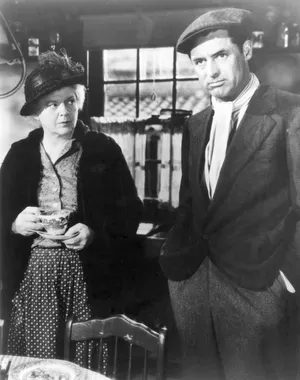
That wait ended in 1944. Clifford Odets saw something specific in her and convinced her to step back into the spotlight. The role? An impoverished Cockney mother in None but the Lonely Heart. Cary Grant was her co-star, playing the son she had to fight for against a world that seemed determined to crush them.
“She effectively toned down her acting style.”
It wasn’t her usual theatrical flourish. It was restrained. Grounded. The performance earned her the Academy Award for Best Supporting Actress, a validation that felt long overdue. She wasn’t just proving she could act; she was proving she could disappear into a character.
The momentum didn’t stop there. A year later, she delivered another compassionate turn in The Spiral Staircase (1946). Suddenly, she seemed comfortable in front of the lens. The intimidation of the medium had faded, replaced by a quiet confidence.
In the years that followed, directors didn’t know what else to do with her. They kept casting her as the imperious but lovable matriarch. You’d see her on screen, commanding the room with a glance, radiating authority wrapped in warmth. It became her typecast, but she owned it.
By 1955, she felt it was time to document the journey. Her memoir, Memories, an Autobiography, hit the shelves, offering a look behind the curtain at a life lived largely in the shadows of fame before stepping, finally, into the light.