





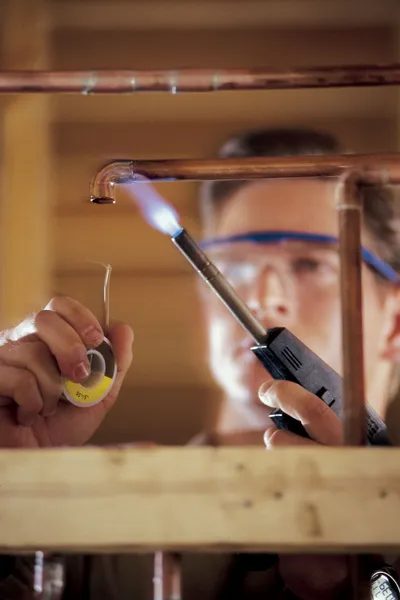
You may have used the technical name soldering without realizing it. Maybe you fixed a broken wire on a guitar lead or patched a leaky pipe under the sink. It is a silent and precise process that joins two metals together. What’s the trick? No need to melt the parts you want to join. Just melt the filler.
This distinction is important. If the base metal melts, it is welded or brazed. The soldering leaves the structural integrity of the original part intact and a low melting point alloy is used to fill the gap. It has nothing to do with the merger and everything to do with the union.
7 steps to perfect joint
Creating strong connections requires more than enthusiasm and hope. If you want the connection to continue, you must follow a certain order.
First you need to clean the metal. Dirt, grease and oxidation are the enemies of soldering. You can use a scouring pad or chemical cleaner to clean the surface on bare metal. Once it’s clean, apply the gel.
Flux is the unsung hero of this process. Its role is twofold. When heated, flux actively removes residual oxides. More importantly, the molten solder can spread and “wet” the surface. Without flux, the solder tends to bead up like water on a waxed car instead of flowing into the solder joint.
Next is alignment. You have to control the gap between the two pieces. This gap should be small, 0.025 to 0.125 mm. About 0.001-0.005 inches. If the gap is too wide, the solder will not enter properly due to capillary action. If you tighten it too much, the flux will not come out.
Heat up next. When the metal is hot enough, solder can be fed into the joint instead of a flame. Capillary action draws liquid metal into microscopic spaces and does the heavy lifting. As the solder flows, the heat can be removed.
This is where most beginners fail. The joint must cool without moving. Even small vibrations as the solder hardens can make the joint weak and rough. Finally, you need to wash off the flux residue. Many fluxes are corrosive. If you leave them, your joints eat away over time and can cause damage months or years later.
Choose the right material
Not all solders are created equal. The type you use depends entirely on what you want to fix.
Tin and lead alloys are the mainstay of industry. It is used in wires and pipes because it flows easily and forms strong bonds. These are also standard in the repair of brass and copper radiators.
However, solder comes in many different forms. Sometimes it’s a wire. Sometimes it’s a bar. For more complex tasks, it is a pre-mixed paste. The choice of shape is determined by accessibility and the amount of heat in the surrounding area.
The choice of flux is very important
Using the wrong flux can ruin even the best solder. For copper alloys, fluxes based on zinc chloride are the go-to. If you use stainless steel, you need to add hydrochloric acid.