



Autumn has settled in, bringing with it the familiar constellations we’ve watched for months. But if you look closely at October’s night sky, you’ll notice it’s offering more than just standard seasonal viewing. There are three specific astronomical events happening right now. They won’t all be visible to the naked eye, but they’re worth tracking. One involves a total lunar eclipse over the Pacific. Another is Uranus making its closest approach to Earth. And on October 19, the Red Planet will share the sky with a comet.
The Total Lunar Eclipse Over the Pacific
First up is the moon itself. A total lunar eclipse is scheduled to take place, visible primarily over the Pacific Ocean. This isn’t a subtle shadow play. During a total eclipse, the Earth passes directly between the sun and the moon, blocking direct sunlight. The result is often a coppery-red glow, sometimes called a “blood moon.”
For observers in the Americas and parts of Asia, this will be a prime viewing opportunity. Those in other regions might catch the beginning or end of the event, depending on their horizon. It’s one of the few celestial mechanics events you can actually witness without expensive gear. Just step outside. Find a clear view of the moon. Watch as the shadow creeps across its surface.
Uranus Reaches Closest Approach
While the moon gets the drama, Uranus is having a quiet but significant moment. In these days, the seventh planet from the sun is at its closest point to Earth in its orbit. This isn’t a daily occurrence. Uranus takes nearly 84 years to circle the sun. Its elliptical path means the distance between it and us varies significantly.
Why does this matter? Distance changes brightness. When Uranus is closest, it appears slightly brighter and larger in telescopes. If you have a modest telescope, now is the time to scan the stars. You’re looking for a tiny, pale blue-green disk. Not a star. A disk. It’s faint, though. You won’t see it without optical aid. But knowing the planet is physically nearer than usual adds context to what you’re looking at. It’s a reminder that these distant worlds are in constant motion.
Mars Welcomes a Comet on October 19
The most visually striking event for stargazers might be the one involving Mars. On October 19, the Red Planet will appear in close proximity to a comet. This isn’t a collision. The comet will pass near Mars in our line of sight from Earth. It’s an optical alignment, but a beautiful one.
Comets are icy bodies that release gas and dust as they approach the sun, forming a visible coma and tail. When a comet appears near a bright planet like Mars, it draws attention. Mars is already a dominant feature in the night sky this time of year. Adding a comet creates a rare pairing. It’s the kind of sight that gets amateur astronomers excited. You’ll need binoculars or a telescope to see the comet’s details, but the juxtaposition of the red planet and the fuzzy comet streak is something to behold.
Why These Events Matter
We often think of astronomy as distant. Unrelated. These events tie us back to the mechanics of our solar system. The moon’s shadow tells us about Earth
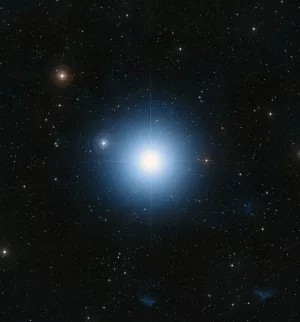
Formalhaut is making its seasonal debut. It sits low on the southern horizon right now, marking the shift into autumn. You can catch it in the constellation of Piscis Austrinus, the Southern Fish. The name comes from Arabic, translating roughly to “The Mouth of the Southern Fish.” It is bright. Very bright. Located just 25 light-years from our sun, this blue-white star is one of the most prominent fixtures in the fall sky.
Seeing it requires patience. By early October, look south just after sunset. The star hangs low. Its light has to punch through thick layers of atmosphere near the horizon. This creates a dramatic effect. The air distorts the light, making the star twinkle violently. Sometimes it flashes in bursts of color as the wavelengths bend. It looks like it is breathing.
This wasn’t always just a bright dot to ancient eyes. In Persia, it was known as Hastorang. It was one of the “Four Watchers of the Sky.” These were specific stars assigned to guard the four cardinal points of the celestial sphere. Aldebaran watched the East. Regulus took the North. Antares guarded the West. Formalhaut was assigned the South. The philosopher Zarathustra wrote about them. Roughly 5,000 years ago, Formalhaut even helped mark the winter solstice. It held the sky together for civilizations that mapped the heavens with nothing but naked eyes and intuition.
When the Moon Hides Saturn and Uranus Rises
The sky has some sharper, more technical events coming up, too. They are harder to see but worth knowing about.
Take the lunar events in late October 2014. On October 8, there is a total lunar eclipse. A “blood moon.” Unfortunately, if you are in Europe, you are out of luck. The Earth’s shadow falls mostly over the Pacific Ocean. You would need to be in western North America or eastern Australia and Asia to see the red planet clearly. For everyone else, the geometry just doesn’t work.
Then comes October 25. The moon will pass in front of Saturn. An occultation. In theory, Saturn disappears behind the lunar disk and reappears minutes later. In practice? Good luck spotting it. The event happens shortly after sunset. The sky is still too bright. The contrast is terrible. Unless you have a telescope and a clear, unobstructed view of the western horizon, it will likely be a non-event. The moon will be there, but Saturn will be lost in the glare.
Finding the Ice Giant in the Dark
Meanwhile, Uranus is having its moment. It reaches opposition on October 7. This means Earth passes directly between Uranus and the sun. The planet is fully illuminated. It is also at its closest approach to us. Well, as close as it gets. We are still 2.848 million kilometers away. That is a long way. But it is the best window we have.
Uranus will rise in the east as the sun sets. It will track across the sky until it drops in the west. It looks faint. A tiny, greenish-blue speck. You probably won’t see it with the naked eye unless you are in a location with absolutely zero light pollution. Even then, it is barely visible. A telescope or binoculars are mandatory.
Through lenses, the lack of detail is frustrating. It is just a blue-green dot. No bands like Jupiter. No rings like Saturn. Just a flat, featureless ball of ice. But knowing it is there matters. It is a reminder of how vast the solar system is. We live in a tiny bubble around a star, looking out at a
The Siding Spring Close Call
Most people think of space as empty. It isn’t. The encounter between Mars and Comet Siding Spring in October proves that. On October 19, C/2013 A1 will whip past the Red Planet at a heart-stopping 132,000 kilometers. That sounds like a safe distance until you realize the comet’s dust halo is wide enough to swallow Mars whole. The debris field will brush against the Martian atmosphere and orbiting spacecraft.
This proximity is a double-edged sword for scientists. It offers a rare chance to dissect a long-period comet up close. Spacecraft can analyze the composition of the coma—the cloud of gas and dust surrounding the nucleus. But it also presents a lethal threat. The dust grains are traveling at 56 kilometers per second. At that speed, a speck of ice hits with the force of a sandblaster. Electronics aren’t built for that kind of impact.
NASA had to act fast. Engineers couldn’t just hope the dust would miss them. They shifted the orbits of vulnerable Mars orbiters to place them on the side of the planet facing away from the comet. It was a protective shield made of rock. Other probes were ordered to shut down their most sensitive instruments. Better to go dark than to fry a multi-million dollar eye.
For those of us on Earth, the view is different but no less dramatic. Observers in the Southern Hemisphere can already spot the comet. It appears as a bright smudge in the constellation Ophiuchus. A pair of binoculars or a small telescope is all you need to see the visitor. We are watching history happen in real time. The dust will settle eventually. The question is whether the machines will survive to tell the tale.


