




You think you know puzzles. You’ve spent a few rainy afternoons or quarantine weeks chasing the edge pieces. But the jigsaw puzzle didn’t start as a hobby. It started as homework.
Sir John Spilsbury, an English engraver in the mid-1700s, is the guy credited with the invention. The year was 1766. He glued a map of the world onto a slab of wood. Then he cut it up. Teachers used these cutouts to teach geography. It was educational. It was boring. It wasn’t “fun” yet.
Now look at where we are.
The Evolution of Giant Puzzles
Spilsbury wouldn’t recognize his brainchild today. Jump to the early 20th century and puzzles became marketing junk. They were cheap. Often free. Given away by companies to sell products.
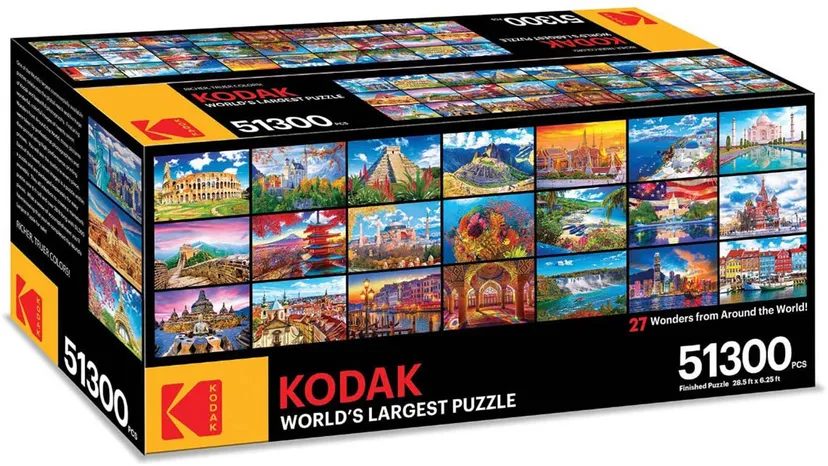
Kodak still plays this game. They are currently selling what they claim is the “world’s largest jigsaw puzzle.” It’s a monster.
It has 51,300 pieces. When you finish it, the image spans 28.5 feet by 6.25 feet. That is 8.6 meters by 1.9 meters. The price tag? Over $400. It features 27 images from around the globe. It’s impressive.
But if you care about surface area, Kodak loses.
The Real World Record Holders
Guinness World Records holds the title for the largest jigsaw puzzle by surface area. The record was set in Dubai in July 2018. It wasn’t for fun. It was for the Year of Zayed. A tribute to Sheikh Zayed bin Sultan Al Nahyan, the founding father of the United Arab Emirates.
The puzzle depicted Zayed. It contained more than 12,000 pieces. The official size measured 65,905.17 square feet. That is 6,122.68 square meters. Huge.
But if you care about piece count, Vietnam wins.
The University of Economics of Ho Chi Minh City pulled off a stunt that defies logic. 1,600 students participated. They built the jigsaw puzzle with the most pieces ever. The number is 551,232.
The result was a lotus flower with six petals. The dimensions were 48 feet, 8.64 inches by 76 feet, 1.38 inches. That’s 14.85 meters by 23.20 meters. It took the students 17 hours to complete. Think about the logistics of that.
Why Some Puzzles Are Impossible to Solve
Not all puzzles are about size. Some are about sheer torture.
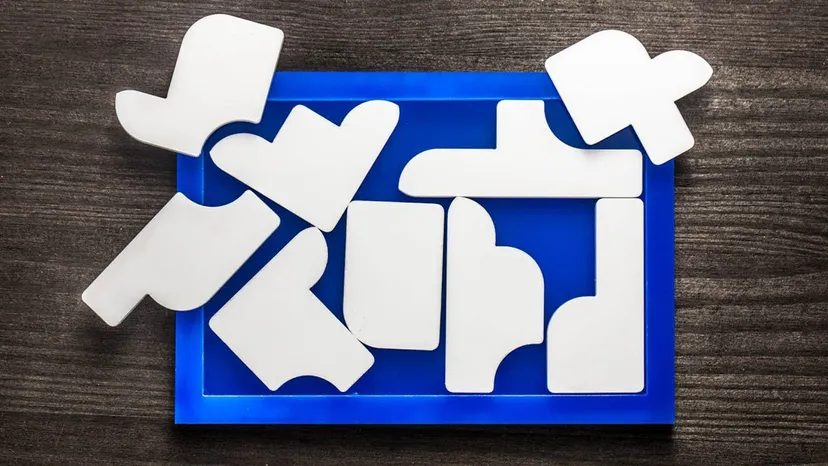
The Ice Puzzle 9 has only nine pieces. It is widely considered the world’s hardest jigsaw puzzle. Designed by Yuu Asaka, it includes a small board. The pieces have right angles and curved edges. They fit together in multiple combinations. It’s like Tetris. Except you can’t rotate the screen.
The challenge is the last piece. Filling the board is nearly impossible.
Chris Ramsay. A magician. Video creator. Master puzzler. He spent two hours and nine minutes solving it. He was exhausted.
Asaka has another contender. Jigsaw Puzzle 29. You have to fit 29 pieces into a 5-inch by 5-inch tray. The trick? It comes with five corner pieces. Just let that sink in. Five corners for such a small space.
It’s not just about finding the right image. It’s about geometry breaking your brain.
We spent centuries cutting up maps to teach kids where France is. Now we’re paying hundreds of dollars to assemble digital-style landscapes the size of basketball courts. Or struggling with a nine-piece puzzle that refuses to click.
The hobby has twisted into something unrecognizable.
What happens when we run out of space to build?
Most people assume the biggest jigsaw puzzle records are held by massive corporations or factories. They aren’t. The ones that stick in the Guinness World Records books often come down to individual obsession and stubbornness.
Take Dave Evans.
He’s from Weymouth, Dorset, in England. In 2012, he decided to build a largest hand-cut wooden jigsaw puzzle for the Queen’s Diamond Jubilee. It wasn’t just big. It was massive. 40,763 pieces. 33 different images celebrating the jubilee. When finished, it stretched 20 feet by 8 feet.
It also collapsed immediately.
Wood is tricky. It moves. It breathes. Evans and four assistants spent over 16 days rebuilding the mess. They hauled it to Sandringham. They proved it counted. The record stood.
Then there is the collecting side. You need people who don’t just buy puzzles but hoard them with purpose.
Luiza Figueiredo started in Sao Paolo, Brazil in 1967. That is fifty years of collecting. By 2010, she hit 238 puzzles. Guinness recognized it. She broke her own record in 2012 with 502.
But records are slippery things.
In November 2012, Georgina Gil-Lacuna of the Philippines stepped in. She had 1,028 puzzles. She took the title. Figueiredo didn’t quit. She kept hunting. By July 2017, she returned with 1,047.
She is still the current record holder for the largest collection of jigsaw puzzles.
Why does this matter? It highlights the competitive nature of these niche hobbies. These aren’t just pastimes. They are arenas.
“One of the main criteria for all Guinness World Records titles is that they must be breakable. Every record title that is monitored is open to being challenged, which allows for all kinds of record-breaking opportunities all over the world,” says Kaitlin Vesper, records manager with Guinness World Records North America.
The system is designed to be challenged. It forces people like Evans to rebuild collapsing wooden behemoths. It pushes collectors like Figueiredo to keep scanning auction houses and thrift stores until they edge out competitors.
It’s not about the cardboard and glue. It’s about the hunt. And the hunt never really ends.
Corporate records dominate the landscape of jigsaw achievements. Unima Industrial Ltd. in Hong Kong holds the title for the largest spherical jigsaw puzzle. The feat measured 15.7 feet in circumference. The image featured Winnie the Pooh. It is not just about assembly. It is about scale.
“Brands and businesses come to us looking to harness the power of record breaking to commemorate anniversaries and celebrations or to highlight the launch of a new product,” Vesper explains.
Individuals can participate. Families. Schools. Entire communities. The barrier to entry is low. But the rules are strict.
Defining the Human Puzzle Piece
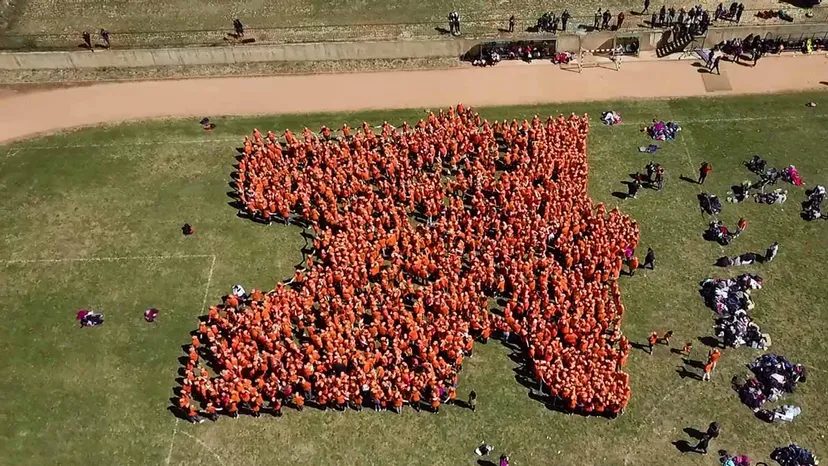
In March 2019, a unique record emerged. More than 1,700 people formed the largest human jigsaw puzzle piece. It was a first. The cause raised awareness for autism spectrum disorder. The puzzle piece serves as the symbol for Autism Speaks. But the logic holds a flaw. Is it a puzzle piece if there is no puzzle for it to fit?
Guinness World Records has specific guidelines. The category falls under ‘largest human image’. The goal is a recognizable image. The definition of a jigsaw piece matters here. It must be oddly shaped. Interlocking. Tessellating. Designed for a larger picture.
The human image must be instantly recognizable as a ‘piece’. Not an entire puzzle. If another group creates the same image with more people, the record breaks. The definition is rigid. The execution is public.
Ink and Irony
Not all records involve paper or people. Some involve skin. Enigma, also known as Paul Lawrence, holds a distinct title. He is a sideshow performer. Actor. Musician. Originally from Seattle.
In 2011, he set the record for most jigsaw puzzle pieces tattooed on the human body. The count reached 2,123 pieces. They covered his body from head to toe. The name fits the work.
Is there a second place? No word on anyone coming close. The ink is permanent. The record stands.
Why These Records Matter
People ask why anyone would attempt this. The answer lies in visibility. Companies use records for product launches. Communities use them for awareness. Individuals use them for personal milestones.
The human jigsaw puzzle piece record highlights a specific issue. Autism awareness. The image is simple. The execution is complex. The guidelines are clear. The competition is open.
Anybody up for the challenge?