
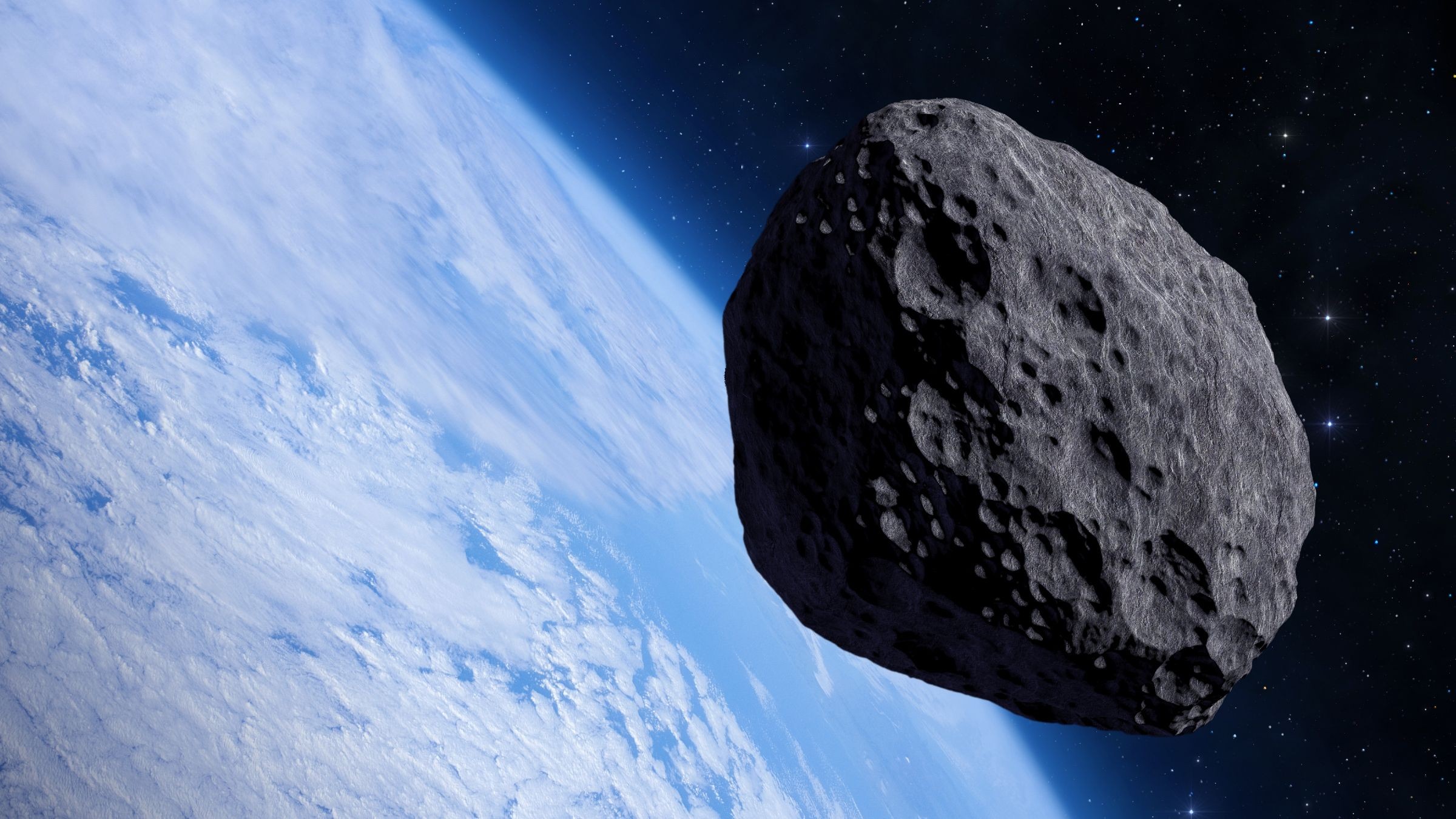
Look up in 2029.
Up to 7.6 billion of us might actually see a rock named Apophis tear across the night sky.
It sounds like a disaster movie premise. It’s not. The asteroid, nicknamed the “God of Chaos” after the Egyptian serpent of disorder, isn’t coming to kill us. At least, not yet. It’s just driving by. Very close.
Scientists at the Apophis T-3 Years workshop in Italy released new maps this June showing just how widespread this “once-in-a-millennimum” sight will be. The asteroid will zoom past closer than some geosynchronous satellites. Closer than you’d expect, certainly, but far enough away that the International Space Station and its orbital neighbors remain safe.
Sighting Apophis… is a way of feeling a smallness of Earth in the vast space. — Richard Binzel (MIT)
It’s a peanut-shaped chunk of rock about 1,50 feet wide. Imagine the Empire State Building. That’s how big this thing is. If it hit Earth? Game over. A city wiped clean.
It doesn’t.
Apophis orbits the Sun every 10 months. It hangs out between Venus and Earth. Right now. As we speak.
Here’s the twist: The closest approach happens on April 13, 2029. That’s less than three years away. It’ll dip within 19,00 miles of the planet. For context. That’s nothing. In cosmic terms, it’s practically hugging our atmosphere. But zero risk of impact. For this flyby. And the next century.
Still. People get nervous.
Some experts worry the Earth’s gravity could nudge Apophis off course. Permanently alter its path. Maybe make it dangerous for future generations? Scientists hate uncertainty. So they’re watching. Hard. Telescopes worldwide will coordinate. NASA even plans to fly OSIRIS-APX nearby. To study. To learn. To protect.
The UN called 202 the “International Year of Asteroid Awareness.” Because we need to remember where we are. Small blue dot.
Richard Binzel hopes kids look up and feel curious. Not scared. Just… intrigued. Maybe that spark starts a career. In science. In space.
Who gets the best seat?
Not you, if you’re in North America. Sorry.
The maps break down the roughly seven-hour window when the rock passes Earth. You need darkness. Clear skies. Low light pollution.
- Start of flyby: About 4.5 billion folks across Australia and Asia.
- Closest point: Roughly 1.9 billion viewers in eastern South America, northern Africa, and bits of Europe.
- Peak visibility: Somewhere in the middle. As many as 5.7 billion people from eastern Africa, Southern Europe, the Middle East, Asia, and Australia might spot it.
Astronomers in Spain’s Canary Islands? They’ll likely capture the crispest shots.
What does it look like?
Not a flaming meteor. Not a giant shadow blocking the sun.
Binzel calls it a “modest star.” Bright. Like the stars in the Big Dipper. Moving slowly. Like a satellite. Just… bigger. Closer. Real.
Will you look?