


The Hardware Problem
Language feels like us. It’s the thing that separates the hairless chimp from the rest. Jacob Michaelson at the University of Iowa agrees. He calls it the defining feature of Homo sapiens.
His team found the reason.
Tiny bits of DNA. Regulatory elements they call HAQERs. Human Ancestor Quickly Evolved Regions. They developed before humans and Neanderthalls split from their common ancestor.
“What we’re seeing is how a very slim part of the genome can have such an outsized influence”
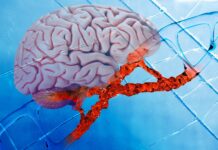
They make up less than 0.1 percent of the genome. Yet they influence language ability two hundred times more than other regions. Think of them as the biological structure. The hardware. Language is the software. The code. You need the box before you run the program.
The Saliva Bank
This isn’t just computational guessing.
It started in the 90s. Bruce Tomblin PhD collected saliva from 350 Iowa students. He recorded their speech skills. Then he stored the samples. For decades.
Michaelson’s lab recently pulled them out. They looked for links between genetics and language ability. NIH funded the digging. They published the results in Science Advances.
These aren’t genes. They’re knobs. Volume knobs for genes.
Michaelson compared HAQERs to volume dials and FOXP2 (that old favorite of linguists) to the hand turning them. FOXP2 gets credit often. But HAQERs? They control the gain.
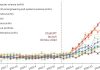
The team used a score called ES-PGS. It separates genetic influence by age. Sixty-five million years of data. Computationally dense. They tracked changes through evolutionary strata.
The Neanderthal Shadow
Here is the twist.
Neanderthals had them too.
These volume knobs existed in Neanderthals. They might have even been more pronounced in them.
This implies HAQERs are ancient traits. They contributed to communication long before us. But Neanderthal cognition differed. Their society was organized. Culture exists. Archaeology backs this up. So maybe their words were complex too.
“Humans had the hardware for language earlier than what we thought”
But there’s a snag. A hard stop.
Why did HAQERs stop changing? They leveled off. Other cognitive genes kept evolving. We got smarter in other ways. HAQERs sat there.
The Ceiling
Nature hates free lunches. Or at least. She charges for them in blood.
Michaelson calls it balancing selection. The pathway maxed out early.
Here is the trade-off. HAQERs help build fetal brains. Larger brains mean bigger skulls.
Big skulls mean hard births.
Before modern medicine. Death was common. For mom. For the baby. So evolution hit a ceiling. It couldn’t keep tweaking HAQERs to boost brain size without killing everyone. The risk outweighed the gain.
Other aspects of intelligence? The kind that doesn’t require a wider birth canal? Those kept growing. We became clever in ways that didn’t get us stuck in labor.
It was a bottleneck. A hard limit. The biological foundation for language hit a wall. And we stayed there.
Family Secrets
Now Michaelson is looking forward. Backwards actually. To family.
The original Iowa kids are parents now. Their kids have data too. Three generations. This helps separate nature from nurture. Literally.
“Disentangling environmental input from genetic input”
Kids in language-rich homes speak better. But is that environment. Or genetics.
Researchers call it “genetic nurture.” Parents pass genes that make them talk more. The kids get those genes. The parents also create the noisy. Talkative home. You have to split that.
New stats are coming. Advanced tools to isolate environmental factors. It matters for clinical apps. For understanding speech delays.
The answer might be simpler than we think.
We have the oldest wiring for language in the room. And it stopped working for us because we couldn’t fit out of the womb any wider.
What happens next. We’ll have to wait. The data is still talking.