




The answer might surprise you: no, at least not entirely. But the confusion is understandable. Neanderthals, our closest extinct human relatives, roamed Eurasia until they vanished roughly 30,000 years ago. They were short, stocky, and built for the Ice Age cold. Most lived to be about 30, years old, raised in family groups, cared for their sick and elderly, and likely spoke some form of language.
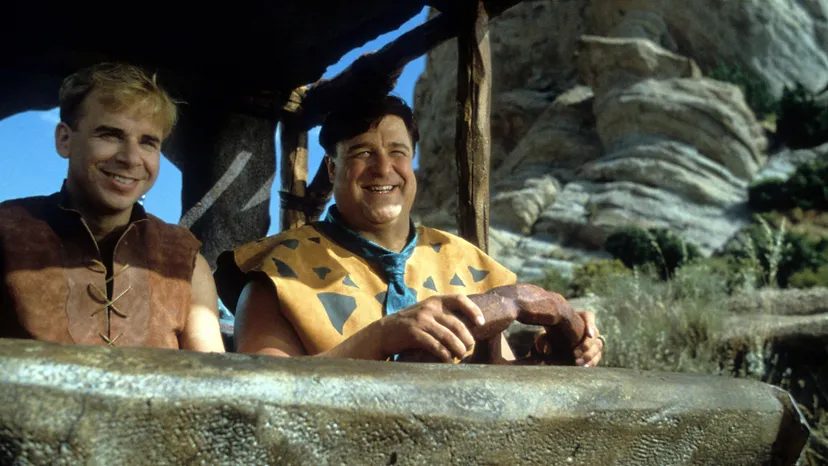
Then there is “The Flintstones.” The show debuted on American television on Sept. 30, 1960, becoming the most enduring animated sitcom on prime-time until “The Simpsons” took the crown. It depicts a pre-historic society where humans and dinosaurs coexist in harmony. The cast includes Fred and Wilma Flintstone, their neighbors Barney and Betty Rubble, their children Pebbles and Bamm-Bamm, and Dino, a pet dinosaur with distinct dog-like traits.
So, how do we separate fact from fiction? Did the cartoon accurately portray Neanderthal life?
The quarry connection and cold weather clues
The first potential link is occupational. Fred Flintstone works at a quarry. Neanderthals were first discovered in 1856 by a group of quarrymen in the Neander Valley near Dusseldorf, Germany. It feels like a direct hit, but it is likely just a coincidence.
What about the environment? Neanderthals thrived in the Ice Age. Does “The Flintstones” show snow? Yes. In the third season, episode six, titled “Snow Gets in Your Eye,” Fred and Barney visit a ski resort for a lodge retreat. The animation features snow and winter sports. However, this does not prove the characters are Neanderthals. Modern humans ski. The presence of cold weather in a cartoon does not automatically label the inhabitants as the species that died out 30,000 years ago.
Why Fred and Wilma are not Neanderthals
The decisive evidence comes from the source material outside the TV show: the DC Comics adaptation.
In the very first issue of the “The Flintstones” comic book, Fred is ordered by his evil, greedy boss, Mr. Slate, to trick local Neanderthals into working in his quarry. The plan relies on the Neanderthals lacking a society that understands money. They agree to work for a day, take the payment, and then hate the job. They choose to pursue their own happiness instead.
This scene establishes a clear hierarchy and distinction. The Neanderthals in this lore are separate from the Bedrock residents. In fact, the comic suggests the Neanderthals were smarter than the “Cro-Magnon capitalists” of Bedrock, recognizing the exploitative nature of the wage system.
Key facts about Neanderthals vs. Bedrock
- Discovery: Neanderthals were found by quarrymen in 1856 in Germany.
- Physical traits: Short and stocky, adapted to cold climates.
- Social structure: Family groups that cared for the vulnerable.
- Extinction: They died out approximately 30,000 years ago.
- Bedrock inhabitants: Coexisted with Neanderthals in the comic books; likely modern humans (Homo sapiens) given their technological and social complexity.
The question of whether Fred and Wilma were Neanderthals is settled by the canon. They are not. They are neighbors, perhaps employers, but definitely not the same species. The cartoon mixes eras and species for comedic effect, creating a pre-historic world that never existed.
Was it a mistake? Probably. But it also highlights how much we project onto the past. We imagine our ancestors as us, just with different tools. The reality is stranger, and more tragic. Neanderthals did not live in Bedrock. They lived in the cold, they raised their families, and they disappeared. The Flintstones just built a house on top of their memory.