




It feels like a rule of nature. If Drew Carey was in a show, it had to be called The Drew Carey Show. If Jerry Seinfeld fronted the series, the title tracked his first name. We assume this is how it works because it always has. But try to imagine a gritty thriller titled The Kiefer Sutherland Show. You can’t. He plays Jack Bauer. The names don’t match.
This self-referential naming convention is a comedy-specific quirk. It traces back decades, starting with The Mary Tyler Moore Show. The trend persisted through decades of sitcoms, but vanished when the genre shifted toward drama. Why did networks bet on the star’s name for laughs but not for suspense?
Tim Brooks knows why. He isn’t just a historian. He was a former TV network executive who ran research departments at NBC, USA Networks, and Lifetime. From the 1970s through 2007, his job was to dissect ratings data and conduct focus group testing. He figured out what viewers actually liked by looking at the numbers. His insights explain how we ended up with a naming structure that feels inevitable, even if it’s logically flawed.
The habit of titling a comedy after its lead actor didn’t just appear out of nowhere. It traces back to minstrel shows in the 1800s, but the real explosion happened when television transformed into big business in the 1960s. That was the era when networks began pouring money into market research. They were trying to figure out how to sell their new shows to the viewing public.
Every summer, networks ran surveys. They measured public awareness and interest in the upcoming fall lineup. The data told a clear story.
Shows that included the star’s name in the title immediately stood out. This was true even two or three months before the premiere. Viewers recognized the name instantly. They didn’t need to see any promotional material. The celebrity brand did the heavy lifting.
The Marketing Logic Behind the Name
Entertainment marketing has one primary goal. Get viewers to “sample” the product. The media marketplace is crowded. Studios and production companies have to cut through the noise. Leverage existing celebrity cache is one of the most effective tools available.
Consider Bill Cosby. He had sold millions of albums in the 1960s. A generic title like “The Thursday Night Comedy Show” would have been invisible. Naming it “The Cosby Show” pulled in fans who already liked him. They would tune in to check it out.
This is why the trend usually applies to the lead. Even when famous actors play supporting roles, their characters don’t get their own name in the title. The lead is the hook.
“The Cosby Show” remains the shining example of this strategy. The title was chosen purely for marketing purposes.
When Names Match, When They Don’t
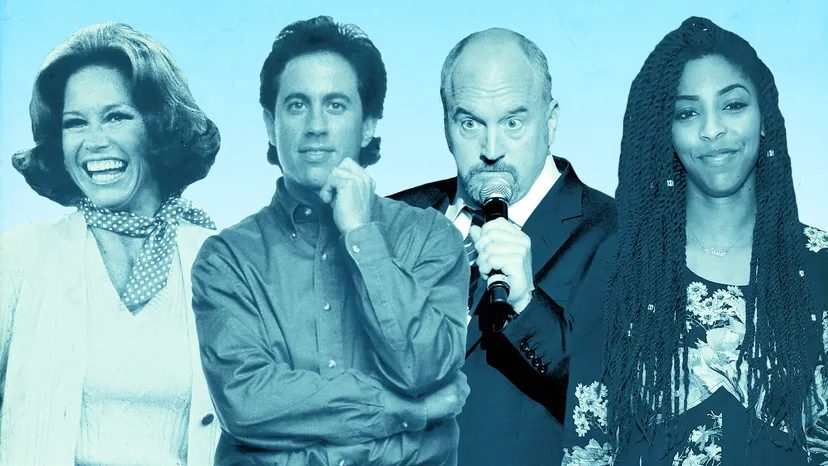
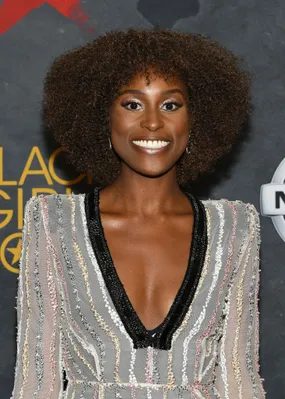
In many sitcoms, the title character shares the first name of the comedian. Mary Tyler Moore played Mary Richards on “The Mary Tyler Moore Show”. Roseanne Barr was Roseanne Conner on “Roseanne”. Jessica Williams is Jessica James on “The Incredible Jessica James”.
Jerry Seinfeld shared both names with his stand-up comic character on “Seinfeld”. He was essentially playing himself.
Bill Cosby was different. His character was named Dr. Heathcliff Huxtable.
Would “The Cosby Show” have been as successful if it had been called “The Huxtables”?
Probably not.
Why Celebrity Names Beat Character Names
The distinction matters. A character name like Huxtable tells you nothing about the tone or the appeal. It requires explanation. It requires promotion. A star’s name is a signal. It’s a promise of style. It’s a shorthand for quality.
This isn’t just about ego. It’s about economics. Networks spent millions on research. They found that recognizable names reduced risk. They increased the likelihood of a viewer picking up the remote. In the 1960s, that was a massive advantage.
Today, the logic persists. Though the landscape has changed. Streaming services have less rigid scheduling. But the principle remains. Stars sell. Names sell.
Think about recent hits. “The Big Bang Theory”. “Friends”. “Seinfeld”. “The Office”. (Though that one is tricky, it still leans on the ensemble’s collective recognition). The pattern is clear.
Is it possible for a show to succeed without a star’s name? Yes. But it’s harder.
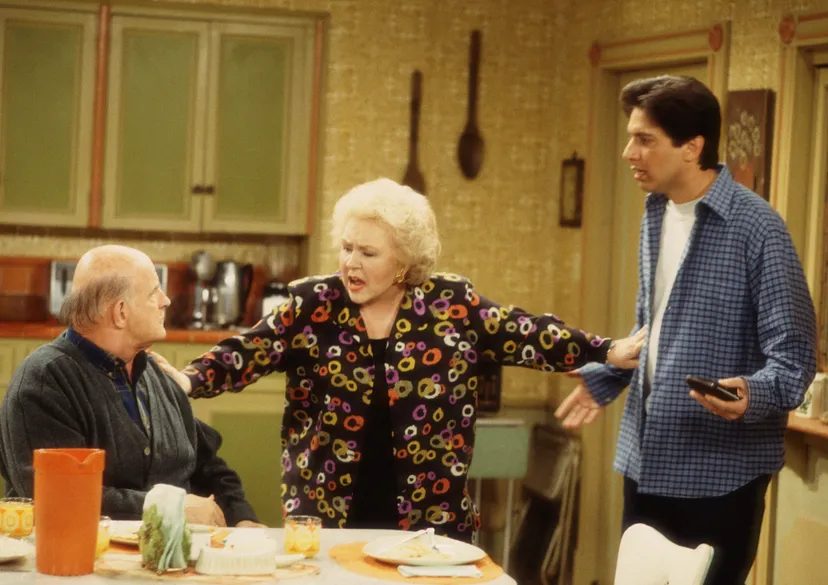
Television has always chased fame. Long before Nielsen ratings or focus groups could quantify what worked, networks and advertisers knew one thing: a famous name pulled eyes to the screen. In the 1940s, when TV was just the “younger sibling” to film, the industry had a problem. Film was where the giants lived.
“Saying John Wayne or Katharine Hepburn,” explains Saul Austerlitz, author of Sitcom: A History in 24 Episodes from I Love Lucy to Community, “TV couldn’t entirely compete on that front. So there was a desire to pump up the performers they did have. Emphasize the star quotient.”
It wasn’t about who you were, but who the audience thought you were.
The Slow Burn to Stardom
Sometimes that recognition didn’t happen overnight. Milton Berle got the gig to host his first variety show, but the network didn’t trust his name enough to put it in the title. It was “Texaco Star Theatre,” named after the main sponsor. Only later did it become “The Milton Berle Show,” and one of the most successful programs in TV history.
Ed Sullivan faced the same delay. The newspaper writer moved to TV in 1948. His show was “Toast of the Town.” It took five years, until 1953, for him to become a big enough star for the name change to “The Ed Sullivan Show.”
The pattern held. You didn’t get the billing until you proved the draw.
When Drama Relied on Faces
While sitcoms cashed in on the star’s name most aggressively, it wasn’t exclusive to comedy. In the 1950s, dramatic anthologies thrived because they were hosted or “presented” by recognizable actors.
Robert Montgomery Presents ran from 1950 to 1957.
The Loretta Young Show lasted from 1953 to 1961.
Jane Wyman Presents The Fireside Theatre aired between 1955 and 1958.
These shows leveraged the star’s persona to sell drama. They used the celebrity as a brand in itself.
The End of the Named Drama
You don’t see this today. New dramas are mostly procedurals. They rely on ensemble casts of relatively unknown actors at debut. The network doesn’t risk the budget on one face.
“You wouldn’t call CSI ‘The William Petersen Show,'” Brooks notes.
The industry shifted. Star power became about the ensemble, not the individual. The title reflects the case, not the cop.
The Comedy Loop
Comedy still loves the self-referential title. Tony Danza knows this better than most. He starred in four separate sitcoms where his character shared his name.
“The Tony Danza Show” ran briefly in 1997. But it wasn’t his first time. His character on “Taxi” was originally named Phil Banta. Producers changed it to Tony because they were afraid Danza wouldn’t answer to “Phil.”
They wanted the name. They wanted the recognition. They still do.
Just look at the lineup now. The titles are different. The strategy isn’t.