




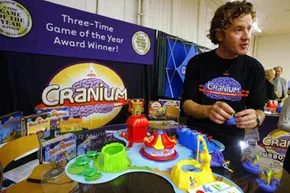
Most people picture a successful board game launch happening in a toy store. Think shelves lined with colorful boxes, holiday rushes, and a standard retail pipeline. The story behind Cranium is significantly different. It didn’t start in a toy aisle. It started in a Seattle Starbucks, largely because the founders missed the most important trade show in the industry.
Richard Tait and Whit Alexander were former Microsoft employees living in what they jokingly referred to as the “Microsoft Millionaire” ecosystem of the mid-1990s. They had stock options that made retirement look easy, so they looked for a startup project that didn’t feel like another piece of tech infrastructure. Tait pitched the idea to Alexander: a board game where every player’s skills were celebrated. No one was the “loser” just because they were bad at math or history. Everyone had a strength.
They poured $100,000 of their own money into the prototype. By 1997, they had a working game. The feedback was strong. One tester actually tried to steal the prototype off the table. But the marketing plan had a fatal flaw. They ordered 27,000 units from a Chinese manufacturer and then completely missed Toy Fair, the annual event where toy retailers buy their inventory.
How a Starbucks Deal Saved Cranium
Sitting in a Starbucks, Tait and Alexander realized they couldn’t wait for toy stores. They had a connection to Howard Schultz, the CEO of Starbucks. They pitched him a deal: sell the game in the coffee shops.
But they didn’t just ask Schultz to stock the register. They asked him to let customers and employees play the game while they waited for their lattes. This was a crucial shift in strategy. If you play a game and enjoy it, you are far more likely to buy it than if you just see a box on a shelf. Starbucks became the first major retailer to sell Cranium. They sold it “like hotcakes,” according to the early reports.
Why Barnes & Noble Changed Their Mind
The strategy didn’t stop at coffee chains. Tait and Alexander went to Barnes & Noble. The initial response from the company was a flat no. “We don’t sell games,” the representatives said.
The founders didn’t leave. They got the director of gift merchandising to play the game with the staff. The staff enjoyed it. The director was convinced. The “we don’t sell games” policy was dropped.
This approach highlights a specific question many retailers ask: Which board games are worth stocking if they aren’t in the toy aisle? For Cranium, the answer was simple. Let people play it first.
The Radio Marketing Gambit
Cranium’s marketing didn’t rely on traditional ads. They launched a campaign where radio DJs read trivia questions from the game on air. If you answered correctly, you got a free copy.
This was a bet on word-of-mouth. The assumption was that the game would be so fun that players would recommend it to friends. The radio campaign just gave them a reason to pick it up in the first place.
Lessons for Modern Board Game Launches
The Cranium story isn’t just about one successful game. It’s about a specific sales channel strategy that bypassed the traditional gatekeepers.
- Direct Access: If you miss the major trade show, find another high-traffic location.
- Experiential Sales: Let people play the product before buying it.
- Strategic Partnerships: A coffee chain can be a better launchpad than a toy store if the audience is right.
The founders proved that a board game doesn’t need to be in a toy store to succeed. It just needs to be in front of people who want to play. Whether you are looking for how to launch a board game without retail or wondering why Cranium became a hit, the answer lies in that Starbucks table in 1997.