

Parenting didn’t start with mammals.
It started with hunger.
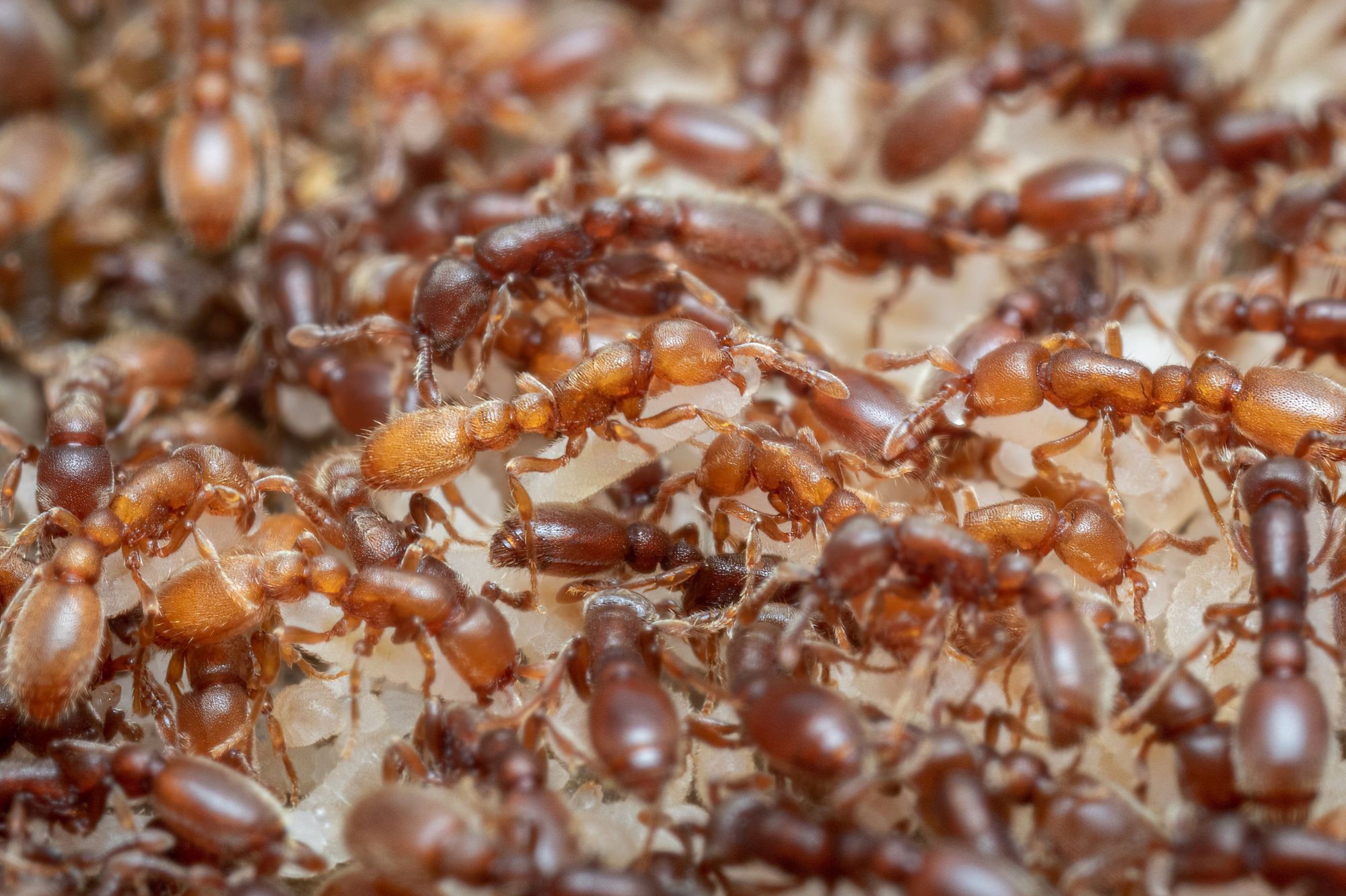
A new study published in Nature shows how evolution repurposed ancient biological circuits to create nurturing behavior. Researchers at Rockefeller University studied clonal raider ants. These insects care for their young. But they didn’t build new brain hardware to do it. They hijacked the systems that regulate feeding.
Evolution rarely invents from scratch. It takes what works and stretches it.
“Evolution takes what it has and works that way, sometimes in very surprising ways,” says Daniel Kronauer, who heads the Laboratory of Social Evolution and Behavior there.
The finding explains why ants, birds, and mammals all care for their young despite different ancestors. The mechanism is surprisingly similar across species.
The Ancient Feeding Circuit Hypothesis
Many animals lay eggs and leave. They offer zero care.
Mammals nurse. Birds tend nests. Ants feed larvae.
How did this change happen? The leading idea is modification. Evolution modified existing systems. It didn’t build new ones.
Earlier studies on mice suggested that neuropeptides linked to hunger also encourage parenting. Testing this in simple animals like fruit flies or roundworms is hard. They don’t care for offspring.
Mice work. But their brains are complex. 100 million neurons.
Ants are simpler. About 60,000 neurons.
This simplicity makes them a powerful model. It allows for faster, more detailed examination of neural circuits.
Mapping the Ant Brain
Kronauer’s team needed a way to measure caregiving precisely. They built a behavioral system. It tracked hundreds of individual ants with individual larvae simultaneously.
They also identified chemical signaling molecules in the ant brain. Then they tested how each one changed behavior.
Ant colonies have a clear age-based division of labor.
Young ants stay inside. They care for larvae.
Older ants go out. They search for food.
The researchers wanted to see how brain chemistry drives this transition.
“We annotated the neuropeptidome… There were 70 that we could identify.” — Kay
This was hard work. But it yielded a list of 70 specific molecules. Now, they can investigate them in various ways.
Two Molecules Control the Switch
The results were clear.
The systems governing caregiving are tied directly to ancient hunger circuits.
Two signaling molecules control the switch.
Neuropeptide F (NPF). It encourages caregiving.
Allatostatin A (AstA). It prompts foraging.
In young ants, NPF is high. AstA is low.
In older ants, the pattern reverses.
This matches their natural shift from nursing to foraging.
The team changed the activity of these molecules. The ants’ behavior changed immediately. This proves the strong influence of these neuropeptides on social behavior.
Hunger still plays a role.
Starving ants increased NPF. They reduced AstA.
They acted more like caregivers.
Fed ants saw the opposite balance. They abandoned caregiving to forage.
“Parental behavior is a lot about feeding,” Kronauer says. “Not just yourself, but your offspring.”
Why This Matters for Human Health
This isn’t just about insects.
Mammals use similar molecules. Comparing these circuits across species could reveal how parenting evolves broadly.
“It amazes me that similar parenting behaviors evolved so many times,” says Kay.
The evolutionary routes to these behaviors are more constrained than imagined.
This could eventually lead to a blueprint for complex social behavior.
There’s another angle. Ants naturally age from caregivers to foragers. This offers a model for healthy aging.
Late-stage neurodegenerative diseases get most funding. But we know little about normal brain changes.
“We actually know very little about how the brain shifts throughout the normal healthspan of an individuals,” Kronauer says.
These dynamics are central to ant society.
Neuromodulators produce age-dependent changes.
This likely applies to other animals too. Including humans.
The brain changes. The behavior changes.
It’s a shift. Not an end.