


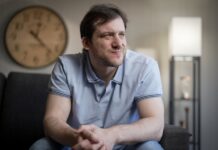
He was a man of science. A respected naturalist. A director of museums. And he was completely wrong about one of the biggest ideas in biology.
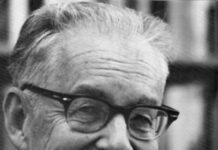
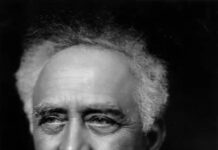
Félix-Archimède Pouchet spent his life fighting a battle that history had already decided. Born in Rouen, France, in 1800, he rose through the academic ranks to become the director of the Rouen Museum of Natural History and the Jardin des Plantes by 1828. By 1838, he was teaching at the School of Medicine there. He was not an outsider. He was part of the establishment.
Yet, he became the leading voice for a discredited theory: spontaneous generation.
The idea was simple enough to understand, which is why it persisted for so long. Life comes from non-life. Microorganisms don’t come from other microorganisms. They just appear. They pop into existence from rotting matter, from fermentation, from putrefaction. It felt true. It looked true. If you left meat out, flies didn’t necessarily have to lay eggs for maggots to appear. They just appeared. Pouchet agreed.
The Argument for Heterogenesis
In 1859, Pouchet published his major work, Hétérogénie. It was his defense. His evidence. His attempt to prove that living organisms are produced by chemical processes alone.
He argued that under specific conditions, life emerges from inorganic matter. It wasn’t magic. It was chemistry.
His supporters were mostly people whose religious or philosophical worldviews relied on this concept. They needed a gap in the chain of causality. They needed a moment where life just happened. Pouchet gave them that.
But he was wrong.
Why Louis Pasteur Changed Everything
The debate wasn’t just academic. It was about the nature of life itself.
Louis Pasteur challenged Pouchet with experiments that were simple, elegant, and devastating. Pasteur showed that microorganisms exist in the air. They are everywhere. They settle on surfaces. They grow in broth not because the broth is “alive” or “generative,” but because it is contaminated by airborne spores and bacteria.
Pouchet’s experiments failed because he couldn’t fully eliminate this contamination. His air filters weren’t good enough. His seals weren’t tight enough. He believed the air in his controlled environments was sterile. It wasn’t. It always is.
Pasteur’s work didn’t just disprove Pouchet. It established the principle of biogenesis: life comes only from existing life.
The Legacy of a Wrong Idea
Today, Pouchet’s arguments are curiosities. History books mention him as a footnote in the story of microbiology. A cautionary tale about how even respected scientists can be blinded by their convictions.
But his story matters. It shows how hard it is to let go of an idea that feels intuitively right. How difficult it is to accept that the world is more orderly than we think. Life doesn’t just happen. It is passed on.
We still misunderstand things. We still believe in shortcuts. We still want explanations that fit our biases. Pouchet was just an early example.
The air around us is not empty. It