



Karl Jansky came across it by chance in 1931. He was trying to detect static interference in transatlantic radio traffic. Instead of finding thunderstorms or city noise, he detected a hissing sound coming from the center of the Milky Way. At that moment, radio and radar astronomy was born. That changed everything.
In the past, astronomers were blind to much of the cosmos. They relied on visible light. But space is full of gas and dust. It blocks the visual view, just like fog blocks a street light. Radio waves don’t care about this mess. They pass right through. This transparency gave researchers a clear view of the galaxy’s core. It revealed structures that simply couldn’t be reached with optical telescopes.
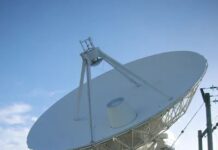
The tools developed quickly. After 1945, the game changed. Engineers built huge parabolic antennas. They improved the receivers. They invented radio interferometers. These tools allow astronomers to see fainter objects in sharper detail. They didn’t just look at the stars. They mapped the interstellar medium. They found things that shouldn’t have been there. Pulsars. Quasars. Objects that defied explanation until radio waves confirmed their existence.
Then there’s radar.
Radio astronomy is listening. Radar astronomy screams. It sends a signal into the void and waits for the bounce. This method measures distances with raw accuracy. It maps surface structures. It transforms abstract points of light into physical worlds.
Think of Venus. It is covered in thick, opaque clouds. Optical telescopes see nothing but an empty yellowish sphere. Radar waves penetrate this thick atmosphere. They bounced off the surface and returned detailed maps. For decades, radar was the only way to see the terrain of Venus.
The moon was next. Long before humans landed, radar studies showed that the surface of the moon was covered with a fine, sandy layer of dust. It wasn’t solid rock. It was regolith. This knowledge has saved lives. It informed the design of the landing gear.
The sun also gets a glimpse of it. Radio observations track solar flares and magnetic storms that go unnoticed. They help us understand space weather, which can disrupt Earth’s power grids.
We started with a hiss from the galaxy’s center of the galaxy. We ended up mapping the planets behind the clouds and listening to the magnetic heartbeat of our own star. The universe is louder and more complex than we ever imagined. And we’re just tuning in.