

Scientists have chased this alchemy for years. Turn chemicals into life. Finally, they’re close.
A team at the University of Minnesota dropped news on Wednesday. They made simple cells. They feed. They grow. They reproduce. They even compete for scraps. Not fully alive, maybe, but it looks a hell of a lot like it.
Kate Adamala led the charge. She’s a synthetic biologist who prefers caution over hype. Life isn’t binary. It’s a spectrum. So she’s hesitant to claim these blobs are truly “alive.” There’s no line in the sand. Or there’s no line we’re happy to accept.
“Life is not binary,” she said. “There’s no clear line.”
John Glass at the J. Craig Venter institute wasn’t involved, but he’s impressed. It’s dazzling. No one has put this many functions into a synthesized cell before.
Drew Endy at Stanford sees it differently. He calls it constructed, not born. Built. But it does what cells do.
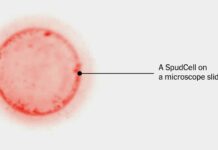
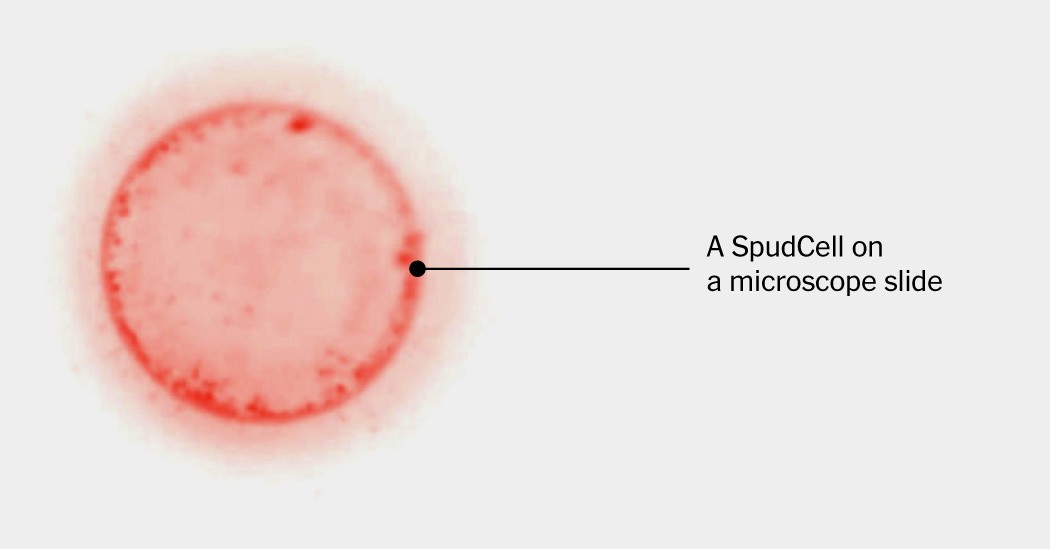
SpudCell is the name. Named for its look. Potato-shaped. Ugly. Functional.
Adamala didn’t patent it. Why lock up a building block? She and Endy want an open community. Hundreds of scientists. Billions of dollars over the next decade. They want to make SpudCells fully alive. And adaptable.
Roseanna Zia, a comp biologist at Missouri University, thinks history will mark this moment. The paper is out, 190 pages of proof, waiting for peer review.
Why bother?
Natural cells are messy. A tangle of tens of thousands of genes and millions of switches. We don’t understand half of what DNA does. A gene thought to control vision might also manage heart rhythm. Chaos.
To fix it, you simplify.
Craig Venter tried going down. He stripped a microbe genome to 525 genes. Still, a third remained a mystery. Even after ten years of trying, 56 genes remain riddles.
Adamala went up.
From the bottom. Lifeless molecules first. Combine them. Hope for life.
It’s hard. Others made oily bubbles. Others put genetics inside bubbles. Putting them together? Impossible, mostly.
Until now.
Cell division is tough. Real cells use protein rings. They anchor, tighten, pinch. Proteins act like winches for DNA.
Adamala tried to mimic it. Failed. Or maybe she gave up. Instead, she broke the rule.
Biophysicists knew proteins on membranes cause bending. Pressure builds. Membrane curves. Pop.
Her bubbles snagged floating proteins. Enough collected. Surface bent inward. Popped in two. Simple.
Took a year to get right.
“But once it works, works,” she said.
Then she built the whole thing.
A broth. About a hundred protein types. Chemicals for reactions. Genes borrowed from a virus. And E. coli. Just 36 genes. Copy DNA. Do basics.
Mix the soup. Add membrane blocks. Spontaneous bubbles formed. Some trapped the soup. Perfect.
They floated in flasks. Fed by channels on their skin. Slurped small molecules.
Sometimes, food came in large bubbles. The cells bumped them. Fused. Stole the nutrients.
Growth ensued.
Add a special protein. Latches to surface. Forces bend. Split. Two new cells. Growing. Feeding. Repeating.
It’s evolution, basically.
They created mutants. These mutants clung to snack-bubbles better. Pit 50/50 mix. Original vs mutant. Five generations.
The mutants won.
That’s the shakeup.
Scientists can pit synthetic cells against each other now. Breed for traits. Rapidly.
But there are flaws. Big ones.
The cell can’t build its own ribosome. That molecular factory makes proteins. Without it, life stalls. SpudCarries the genes to build it. Doesn’t do it. Parts don’t click.
Adamala feeds pre-made ribosomes into the mix.
It’s temporary.
After five to ten generations, the ribosomes degrade. Stop working. The cell halts. Not dead. Just broken.
“I don’t want to say dies,” she said.
Endy saw it. Was awestruck. Started Biotic. A nonprofit. An open-source community.
His life’s work? Pouring into this.
Goal: make SpudCell easy to make.
Adamala takes a day. She has freezers. Knowledge. Recipes down. Biotic will strip the barrier to entry. Hand scientists the tools.
They want cells that build their own parts. Divide forever.
“It’s completely doable,” Glass says.
Meeting in Philadelphia this September. Safety first.
Think about that. Unethical use? Bio-weapons? Maybe.
Future cells could be robust. Engineered for war? Or rocket fuel production. Natural cells won’t touch some toxic chemistry. These might.
Open source keeps it in check. Better to talk now than react later.
Endy compares SpudCell to the Wright Flyer. That flimsy 1903 machine. Twelve seconds of air time.
Didn’t give us a Boeing 737.
But it started the age of flight.
We are just starting.