




Big news today. Or at least, interesting news.
On June 30, NASA dropped an Artemis update that covered two very different things. First, the agency named new commercial partners to deliver scientific payloads to the moon. Routine stuff. Then they tossed out a wilder idea: sending a spare, nuclear-powered rover from the Mars program straight to the lunar south pole.
Yes, a Mars rover. On the Moon.
NASA Administrator Jared Isaacman led the livestreamed briefing. He called it “drawing on the playbook that worked very well” in the 1960s. Basically, he’s invoking Apollo logic. Don’t just jump to the big jump. Test first. Iterate. Fail fast, maybe.
“The there is another,” he quipped, channeling Yoda from Star Wars.
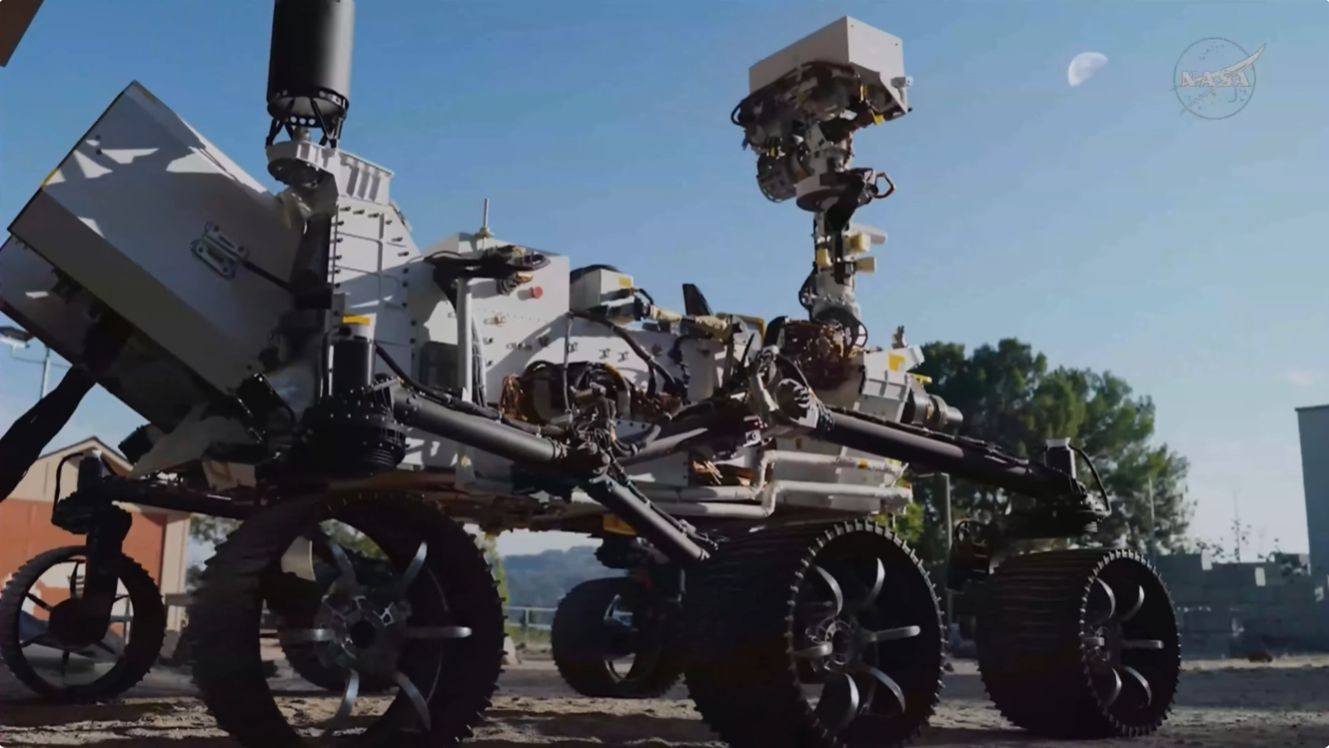
He’s talking about PROMISE. Short for “Polar Rover for Observation, Mapping,” etc. Formerly known as Optimism. A clever name for a testbed. PROMISE was built at JPL to look and act like the Curiosity and Perseverance rovers, but it stays on Earth. Engineers use it to debug software and test hardware before committing the code to the actual Martian explorers. It’s the dress rehearsal.
Now? NASA wants to take that rehearsal stage and send it 240,000 miles away.
Think about the logistics. You send the spare rover to the Moon, and suddenly, you don’t have an Earth-based twin for your Mars fleet. That sounds risky. But Isaacman sees a win. The hardware exists. Taxpayers already paid for it. Perseverance and Curicity are still out there, chugging along, active and healthy.
“So the question was posed,” he said, “What if we send it to the Moon?”
It’s a clever fix for a tricky problem. Most upcoming lunar missions rely on solar power. Solar doesn’t work great near the lunar south pole. Why? Because the poles are in long shadows. Darkness stretches out for days. Or weeks. PROMISE has an RTG—a radioisotope thermoelectric generator. It burns plutonium heat for electricity. No sun required.
The Artemis base will sit right there in those shadowy regions, hunting for water ice. Solar panels will freeze out. Nuclear batteries won’t blink.
Meanwhile, the commercial landscape is shifting.
Astrobotic, Firefly Aerospace, and Intuitive Machines landed the contracts for four robotic landers. These aren’t just shiny prototypes. They are working tools, tasked with dropping science payloads onto the dirt before humans arrive.
This fits into the CLPS initiative. By 2029, NASA aims for up to 20 launches. All commercial. All solar-powered. Except the spare rover, I guess.
Here’s the lineup.
Astrobotic’s Griffin 1 lander got two contracts. One will carry Astrolab’s FLIP rover in late 2026.
Intuitive Machines’ Nova C lander and Firefly’s Blue Ghost are also in the rotation, launching in the next few years.
Each lander carries at least three specific NASA instruments.
- SCALPSS: A camera array. It studies engine exhaust plumes. We need to know how lander kicks-up affects lunar dust. Dangerous ejecta could wreck habitats.
- LRA: Laser Retroreflector Array. Tests positioning tech. Helps landers find where they are.
- LETS: Linear Energy Transfer Spectrometer. Measures radiation. Both in orbit and on the ground.
Carlos Garcia-Golan, the Moon Base program manager, put it plainly.
“We know a lot about the moon… but nothing like what we need to launch before we send humans there.”
He’s fine with the PROMISE pivot. In fact, he thinks it’s exactly what NASA should be doing. JPL’s motto is “Dare mighty things.” Sending a spare parts rover to another celestial body isn’t standard procedure. It’s unconventional. Maybe a bit crazy.
“We are in the business of the impossible,” Garcia-Golan said.
Which makes you wonder. Is the best way to build a lunar outpost by following the plan, or by improvising with what we already have sitting in the lab?
The Blue Origin timeline adds a layer of uncertainty, of course. Their New Glenn rocket blew up last month during a test. Their Blue Moon lander was supposed to lead the charge. Now? We’ll see if Dave Limp keeps his confidence that a new launch is coming this year.
For now, PROMISE waits. Sitting there. Waiting for a destination. Mars? Or Moon?
Either way, the sky is looking a little less empty.