





“I was never used to being happy, so that wasn’t something I ever took for granted. You see, I was brought up differently from the average American child because the average child is brought up expecting to be happy.”
Marilyn Monroe said that in 1954. It’s a heavy line. It cuts through the glamour we associate with her. Most biographies trace her rise to stardom back to her modeling days. They ignore the earlier tethers to Hollywood. Her mother, Gladys Baker Mortenson, worked as a film cutter at Consolidated Film Industries when Marilyn was born. That lab processed film for the studios. It was industry-adjacent, sure, but not special. Plenty of LA kids had one parent touching celluloid.
But Norma Jeane Mortenson’s start was harder.
Born June 1, 1926, at Los Angeles General Hospital, she was named after Norma Talmadge. Gladys loved the movies. She wanted her daughter to be a screen idol. The name stuck. The fatherless situation did not.
The Clark Gable fantasy and the real C. Stanley Gifford
Her birth certificate says Edward Mortenson is the father. He was Gladys’s second husband. Most historians disagree. They point to C. Stanley Gifford. He also worked at the film lab. He vanished when he found out about the pregnancy.
Norma Jeane grew up with a photo on the wall. It showed a man with a thin pencil mustache. Gladys said it was her dad. Gifford had that mustache. It looked like Clark Gable’s. Little Norma Jeane decided the man in the photo was Gable. She told her classmates she was the daughter of the movie star. It was a lie. It was also a survival mechanism.
She never met Gifford. Not really.
As a teen, she called him. She identified herself as Gladys’s daughter. He hung up. The line went dead.
Later, when she was Marilyn Monroe—the global sensation—she tried again. She drove south from LA with a friend to a dairy farm near Hemet, California. She’d park the car. Get out. Walk toward the house alone. Come back empty-handed. She’d say her father refused to see her.
Did she actually knock? Maybe. Maybe she didn’t have the nerve. Maybe the farm wasn’t even his. Maybe Gifford wasn’t her father at all.
Edward Mortenson, the man on the paper, died in a motorcycle accident in 1929. He was Norwegian. He had been separated from Gladys long before Norma Jeane was conceived. He’s a ghost in the records.
Why Marilyn Monroe’s childhood stories are so hard to verify
This matters. The absence of a father left a scar. It never healed. Her stories about him shift. They change. Some are facts. Some are fantasies. She tried to make sense of a hazy past by inventing a bigger one.
It makes researching her early life a nightmare.
Biographers struggle. Marilyn embellished. She exaggerated. She was honest in her heart, but she felt the sting of her beginnings so deeply that it colored everything. She couldn’t just state facts. She had to rewrite them to survive them.
The result? No definitive version of her youth exists. We have fragments. We have orphans homes. We have foster care. We have the truth buried under the myth.
Just before she died in 1962, she filled out an official form. Her secretary watched. Marilyn bitterly scribbled “Unknown” on the line for father.
That’s the final word. Not Gable. Not Gifford. Not Mortenson.
Unknown.
Early Instability and the Bolender Years
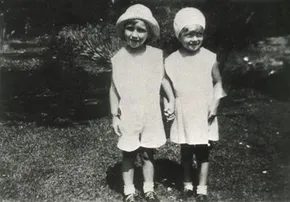
Gladys Baker, Norma Jeane’s mother, handed the baby over to Ida and Wayne Bolender in Hawthorne just days after birth. Gladys had reason to be overwhelmed. Her first marriage to Jack Baker had ended with him taking their two children, Berniece and Hermitt Jack, to Kentucky. He reportedly left a note stating she would never see them again. That loss carved a deep hole in Gladys.
Her family history offered little comfort. Both her parents, Otis and Delia Monroe, ended their lives in mental institutions. Her brother, Marion, suffered from paranoid schizophrenia. Gladys herself battled what is now recognized as manic depression, though doctors in the 1930s and 40s often misdiagnosed it as paranoid schizophrenia. This diagnostic confusion persists in historical records.
Marilyn carried a lifelong fear of genetic insanity because of this lineage. While mental illness can run in families, her later psychiatric struggles likely stemmed more from early deprivation than genetics.
The Bolenders were devout and strict. Wayne worked as a postal carrier, a stable job during the Depression, and printed religious tracts in his spare time. Ida shared his zeal. Little Norma Jeane had to promise never to drink or swear. She attended church multiple times a week. She was told she was going to Hell.
To escape the pressure, she hid when she wanted to sing or act out fantasies. She remembered Gladys not as a mother, but as “the lady with red hair.” Gladys paid the Bolenders five dollars a week to care for her daughter while she worked at Consolidated Film Industries. She visited on Saturdays via trolley.
Baptism and Tragedy
Norma Jeane’s grandmother, Della Monroe, played a different role in the child’s spiritual life. Della, a follower of the flamboyant evangelist Aimee Semple McPherson, took Norma Jeane to the Foursquare Gospel Church. There, the child was baptized and formally named Norma Jeane Baker.
Tragedy struck quickly. When Norma Jeane was two, Della suffered a nervous breakdown and was committed to the Metropolitan State Hospital in Norwalk. A month later, she died of a heart attack during a seizure.
By 1933, Gladys had scraped together enough money to buy a white bungalow near the Hollywood Bowl. For the first time, Norma Jeane lived with her mother. It was a brief window of normalcy. Gladys worked as a film cutter at Columbia Pictures but struggled financially. She rented most of the house to an English couple. The husband was a stand-in for actor George Arliss; the wife worked as an extra.
The atmosphere here was looser. Norma Jeane attended movies regularly, favoring Grauman’s Egyptian and Chinese Theaters. She would place her small feet in the concrete handprints of Gloria Swanson and Clara Bow. A poetic foreshadowing, perhaps. She would eventually join them in that forecourt.
The Descent and Guardianship
The reunion didn’t last. Gladys’s depression worsened. In January 1935, she had a breakdown. The English couple couldn’t calm her down. They called Gladys’s friend, Grace McKee, who advised calling an ambulance. Some accounts claim Gladys attacked Grace with a kitchen knife. Regardless of the details, Gladys was taken to Los Angeles General Hospital, then transferred to Norwalk. The same hospital where Della had died.
Gladys remained institutionalized for most of her remaining life. Like Della, she became obsessed with religion and atonement as she aged.
The English couple kept Norma Jeane for about a year. They eventually moved to a smaller apartment after losing the house, then returned to England. Norma Jeane moved in with neighbors, the Harvey Giffens. Giffen offered to adopt her. A coworker of Gladys’s also offered. Gladys refused both.
After the Giffens moved to Mississippi, Grace McKee was named legal guardian. The luckless little girl was alone again, drifting through a system that seemed determined to fail her.
The Orphanage Years and Foster Home Chaos
Grace Monroe couldn’t keep Norma Jeane. Money was tight, desperation was higher. So on September 13, 1935, she handed her daughter over to the Los Angeles Orphans Home Society. For a kid who’d already bounced around enough, this was rock bottom.
Marilyn remembered the panic. She screamed at the gates.
“Please, please don’t make me go inside. I’m not an orphan, my mother’s not dead. I’m not an orphan — it’s just that she’s sick in the hospital and can’t take care of me. Please don’t make me live in an orphans’ home.”
It happened in 1962 when she finally talked about it. But the story she told later? It was darker than the records suggest. She claimed she scrubbed a hundred cups, plates, and sets of cutlery three times a day. Seven days a week. Her pay? Five cents a month. She gave four of those cents to the church collection plate.
Officials later pushed back. They said the place wasn’t a factory. The kids weren’t slaves. The staff tried hard to make it feel like one big, happy family. Was Norma Jeane abused there? Probably not. But the loneliness? The abandonment? That stuck. It magnified everything.
By summer 1937, Grace pulled her out. She had married Ervin “Doc” Goddard, a guy with three kids of his own. They were trying to build a normal life in a small house in Van Nuys. Domestic harmony, or as close as they could get.
Grace still didn’t keep Norma Jeane right away. She put her in foster care.
Think about that. Jumping from the orphanage into the frying pan of foster homes.
During the Depression, foster parents got state money. It wasn’t exactly a noble motivation for some. Norma Jeane hated it. She was miserable. She begged Grace to send her back to the orphanage. Can you imagine? Preferring the institution to the “family” setting? That’s how bad it was. Finally, Grace and Doc took her in.
Then there’s the other story. The one she couldn’t quite pin down on a date.
Somewhere in those foster years, or maybe earlier, Norma Jeane was molested. She gave different ages in different interviews—six, eight, nine, or sometime in her teens. She said a family friend or a boarder did it. In his room.
When she told her foster mother, the woman didn’t believe her. Some versions say the foster mother slapped her. Yelled, “I don’t believe you. Don’t you dare say such things about that nice man.”
The trauma broke something in her. She developed a stutter. She later blamed the orphanage for it, but the abuse left deeper scars.
Biographers love to nitpick. They say her memory was fuzzy. They say she embellished. They claimed she invented the abuse for sympathy. The people who actually knew her? They saw the truth. The details shifted, sure. The core didn’t. She was abused. It haunted her until the end.
Marilyn Monroe Marries Jim Dougherty
She grew into a young woman. She needed stability. She found it in a high school boyfriend who could offer a legal way out of the foster system.
Jim Dougherty. A sailor. Older. Safe.
Why did she marry him so young? Because she had to. Because the system demanded it. Because she wanted to stop bouncing around.
Who was he? Just a guy. But to Norma Jeane, he was a ticket to a home of her own. Or at least, a home that wasn’t an orphanage.
The stability Norma Jeane finally found with Aunt Ana
Grace McKee wanted to keep custody. Circumstances said otherwise. So thirteen-year-old Norma Jeane moved in with Grace’s maiden aunt, Ana Lower. It wasn’t just a logistical fix. It was the first time this unstable kid had a real home.
Ana belonged to the Christian Science Church. She introduced Norma Jeane to the faith. The girl stayed committed for over eight years. It was the only religious influence that actually stuck. Even after the theology faded, the bond didn’t Norma Jeane kept a book Ana gave her. The inscription inside was heavy.
“Norma dear, read this book. I do not leave you much except my love, but not even death can diminish that; nor will death ever take me far away from you.”
How high school changed Norma Jeane’s confidence
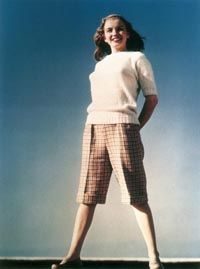
September 1939. Norma Jeane started at Emerson Junior High School in Westwood Village. She was thirteen. Then she grew. Fast. Her figure developed, and suddenly the boys noticed. For the first time, she got favorable attention. Her stutter quieted down. Confidence spiked.
It was a sharp turnaround from the year before. Back then, she was so thin the boys called her “Norma Jeane the Human Bean.” She had repeated seventh grade. But she bounced back, skipping the second half of eighth grade entirely.
Things looked promising until September 1941. She entered Van Nuys High School. But her life as a normal teenager was about to get complicated. Doc Goddard got a promotion. The whole family had to move to West Virginia. The decision was made. Norma Jeane wasn’t coming. And sixty-one-year-old Aunt Ana couldn’t handle raising her alone.
Why Norma Jeane married Jim Dougherty at sixteen
Grace needed a solution. The only alternative to shipping Norma Jeane back to an orphanage, according to Grace, was marriage. Enter Jim Dougherty. He was twenty-one. A local boy. He lived near the Goddards and sometimes drove Norma Jeane and her sister Eleanor home from school.
Norma Jeane had a crush on him. He was a football star. Student body president. A catch, in Grace and Aunt Ana’s eyes. He worked at Lockheed Aviation, building aircraft alongside a young man named Robert Mitchum. Irony is a cruel mistress. Twelve years later, Mitchum would star with Marilyn Monroe in River of No Return.
They started dating casually in December 1941. Grace asked Jim to escort Norma Jeane to a company Christmas dance. By May 1942, they were engaged. Norma Jeane dropped out of University High School in West Los Angeles. She had transferred there in February, but school didn’t matter now.
They wed on June 19, 1942. Less than three weeks after her sixteenth birthday. Aunt Ana helped plan the wedding. She gave Norma Jeane a simple, elegant gown. The Goddards were already gone, off to West Virginia. But Ida and Wayne Bolender came up from Hawthorne for the ceremony. Without a father figure, Norma Jeane asked Aunt Ana to give her away.
The conflicting narratives of the Dougherty marriage
Was it a happy marriage? It depends who you ask. Marilyn later claimed she was pushed into a loveless union by Grace. She said it was just to ease Grace’s conscience about leaving her behind. She never forgave Grace for that maneuvering.
Jim Dougherty told a different story. In 1953, he said, “Our marriage was a good marriage . . . it’s seldom a man gets a bride like Marilyn . . . I wonder if she’s forgotten how much in love we really were.”
Maybe he was right. Maybe she was. With hindsight, Marilyn realized life offered more than that relationship. But in that first year, they spent a lot of time together. Fishing at Sherwood Lake. Skiing at Big Bear Lodge. Movies. Dancing. Jim remembered it as carefree.
Marilyn remembered it differently. In a 1956 interview, she mentioned a suicide attempt. “Not a very serious one.” That detail lingers.
Life on Catalina Island and the start of war work
By fall 1943, the war was raging. Jim felt the pressure of not wearing a uniform. He joined the Merchant Marine as a physical-training instructor. The couple moved to Catalina Island, off the coast of Southern California.
There, Norma Jeane did something unexpected. She took weightlifting lessons from an Olympic champion. Maybe it was Jim’s influence. Maybe it was some secret ambition of her own.
The stability held until the next year. Jim was shipped overseas. Norma Jeane stayed behind, moving in with Jim’s mother. She got a job at the Radio Plane Company in Burbank. It was a defense plant owned by actor Reginald Denny. The girl who couldn’t stay in school was now working on the home front.
The Dope Room and the Camera Lens
The job started with parachutes. Inspecting them. Then she moved up. Or sideways. Into the “dope room.” That’s what they called it. Because of the smell. Norma Jeane sprayed target planes with a thick plastic coating. It stung the eyes. It burned the lungs. But she didn’t complain. She worked hard. Hard enough to earn an “E” certificate for excellent handiwork.
Diligence didn’t pay the rent. It just bought a clean record.
Then came 1945. Army photographer David Conover walked in. He wasn’t there for the planes. He was there for morale. He needed images of women aiding the war effort to send to the boys overseas. He saw her. Eighteen years old. Wearing company overalls. Still looked fetching.
Conover found a sweater in her locker. Just one. He asked her to take the overalls off. Put the sweater on. Pose.
The result? A cover for Yank magazine. It was her first. It launched the model career.
She wasn’t just posing. She understood the lens. Most people freeze. She leaned in. She knew how to use the camera to amplify her beauty. To bring out the glamour. The sensuousness. It wasn’t a learned trick. It was instinct.
Growing up, she never felt like she belonged. Nowhere. Anywhere. But here? In front of the flash? She knew exactly where she fit.
The photos did the rest. They got her noticed.
The Conover Connection and the Reagan Link
Emmeline Snively ran the Blue Book agency like a general. When models came whining about how to channel Marilyn, she shut it down. “If you can show half the gumption, just half, that little girl showed, you’ll be a success too.” She didn’t mince words. There would never be another like her.
Norma Jeane wasn’t just doing one shoot. She kept going back to David Conover. Five dollars an hour. That sounded like pocket change now, but for a girl working in a defense plant, it was serious cash. Real money.
Here is the kicker. Conover wasn’t some random civilian with a camera. He was embedded with the Army’s 1st Motion Picture Unit. They operated out of Hal Roach Studios. His boss? Ronald Reagan. Yes, that Ronald Reagan. The actor turned soldier turned president. So the woman who became the ultimate sex symbol was being photographed by a man reporting to the future commander-in-chief. It’s a weird slice of history.
Her photos hit the pages of Yank and Stars and Stripes. Military magazines. Gritty, patriotic stuff. Norma Jeane loved it. She even tagged along on a photo trek through Southern California. She was hungry for this.
Why Was She So Photogenic?
Everyone agrees she could pose. From day one. But why? That’s the mystery nobody can solve.
Was it luck? Pure, unadulterated natural charisma? Most biographers want to believe that. It makes for a nicer story. A fairy tale where talent wins regardless of the odds.
Or was it calculated? Jim Dougherty and others suggest she was working on her appearance because she wanted out. She wanted the glamour. This version implies agency. She was steering her own ship, chipping away at a dream.
Then there’s the darker take. Maybe she was just trying to get men to look at her. A trauma response to a childhood of being ignored. This paints a picture of insecurity. A woman easily manipulated, desperate for affection.
The truth? Probably all of it. She shifted between these modes. Sometimes she was lucky. Sometimes she was strategic. Sometimes she was vulnerable. You can’t pin her down to one narrative.
Conover’s answer was vague. He picked her from the Radio Plane Company crowd because “her eyes held something that touched and intrigued me.” That’s not a technique. That’s just chemistry. Trying to explain her magic might actually be an insult to it.
The Spec Shoot That Changed Everything
Enter Potter Hueth. A commercial photographer who saw Conover’s work and got interested. He didn’t offer a retainer. He offered “spec.”
That means work for exposure. He would shoot her. He would pitch the photos to magazines. If they sold, she got paid. If they didn’t, she got nothing. Just her time.
She said yes. But with a condition. Evenings only. After her shift at the plant. She was still grinding for a paycheck.
This was the pivot point. The moment the girl from the factory floor started moving toward the spotlight. What happened with those shots? And why did she ditch the brunette look for platinum blonde?
Find out what happened with these photos and the story behind Norma Jeane becoming a blonde on the next page.
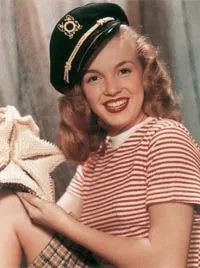
The Blue Book Breakthrough and the Birth of the Smile
Potter Hueth’s photos did more than just capture a pretty face. They landed on the desk of Emmmeline Snively, the head of the Blue Book Model Agency in Los Angeles. That single placement changed everything. Snively sent a brochure to Norma Jeane. She wanted to sign her. But there was a catch.
Blue Book offered a three-month modeling course. The fee was $100. To a young woman working in a defense plant, that was a fortune. Norma Jeje almost bolted. Snively calmed her down. She promised the fee would be deducted from future earnings. Norma Jeane signed. Summer of 1945.
Her first assignment wasn’t even in front of a camera. She hosted a booth for Holga Steel at an industrial show in the Pan Pacific Auditorium. Ten days of standing and smiling. Afterward, she went back to the plant. But she kept going to Blue Book classes.
Snively had specific notes on Norma Jeane’s face. She told her to lower her smile. Why? To fix the shadow under her nose. The result? Quivering lips. That specific, shaky pout became Marilyn Monroe’s trademark. It wasn’t an accident. It was instruction.
From Norma Jeane to Jean Norman
Snively played with names too. For some jobs, she called her Jean Norman. It sounded more sophisticated. Norma Jeane didn’t mind. She wanted to work. She was obsessed with getting it right.
She studied every photo. Found the bad ones. Asked photographers what went wrong. She listened. She never made the same mistake twice. This wasn’t just talent. It was discipline.
Then came the salon. 1946. Snively sent her to Frank & Joseph’s Beauty Salon. The gig? A shoot for Rayve shampoo. The salon was serious. They styled hair for Rita Hayworth, Ingrid Bergman, Judy Clark, and even Gorgeous George. Norma Jeane walked in. She was timid. She asked if they could make her look better.
The Accidental Blonde Transformation
Sylvia Barnhart, a tint technician, and the owner, Frank, took charge. Barnhart described Norma Jeane’s hair as “brown and kinky.” They used a strong straightening solution. It did more than straighten. It lightened. The hair turned a reddish-blonde.
Norma Jeane liked it. She wanted more. She wanted blonder. Over the next four or five months, Barnhart lightened it step by step. Golden honey-blonde.
Forget the myth that she hated being blonde. Barnhart says that’s nonsense. Norma Jeane loved it. She felt the lighter color made her eyes pop. Barnhart called them “beautiful” and “luminous.”
They became friends. Barnhart bought her lunch. Norma Jeje was often late, which annoyed Barnhart. But the anger never lasted. Norma Jeane had them wrapped around her finger. Barnhart styled her hair for the next five to seven years. Long after the shy girl became the star.
The End of a Marriage
While her career was taking off, her personal life was unraveling. She was still married to Jim Dougherty. He was a sailor. He was deployed. They were apart.
The distance killed it. Norma Jeane was changing. Jim was stuck in the past. The divorce was inevitable.
Marilyn Monroe Gets Divorced
The marriage to Jim Dougherty lasted less than two years. It began in 1942, right after she turned 16. It ended in 1946.
Jim was away at sea. Norma Jeane was in Los Angeles. She was working. She was meeting people. The spark was gone.
She filed for divorce. The reason? Irreconcilable differences. Standard. Boring. Accurate.
Jim agreed. He didn’t fight it. He knew it was over. The decree was finalized in February 1946.
Norma Jeane was single again. She was free. She was also broke. But she had Blue Book. She had the smile. She had the blonde hair.
She was ready for the next step. And it was going to be huge.
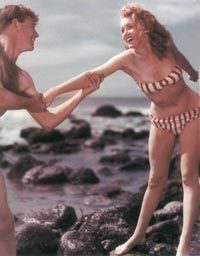
Norma Jeane’s career pivot kills the Dougherty marriage
Hair was looking good. Life? Not so much.
Norma Jeane’s marriage to Jim Dougherty was always shaky. The emotional foundation was thin, but the real stressor wasn’t fully visible yet. That would come with her new job.
Summer 1945. She was living with Jim’s parents. They hated her vocation. It was suffocating. So she moved back to her aunt Ana Lower’s place. Easier for everyone. Jim’s mom told her to write Jim, who was still overseas, and ask if he was okay with modeling. Norma Jeane said no time. She moved forward.
By Christmas ’45, Jim was home on his second leave. Norma Jeane had quit Radio Plane Company. Modeling was now her full-time gig.
She was happy to see him. But Jim saw the cracks immediately.
Unpaid bills from local department stores sat on the table. A lot of them. He dug deeper. She had spent his military allotment plus their savings on clothes and accessories. Her defense? The clothes were necessary for her career.
Makes sense to her. Did not make sense to him.
Her conversations shifted, too. No more talk about their future. Just her career. She was constantly on assignments, even while he was on leave. She took an extended trip to the Pacific Northwest with photographer Andrè de Dienes. Jim realized he wasn’t the center of her world anymore. He was incidental.
Jim Dougherty later blamed his Merchant Marine duties for the breakup.
In his 1976 book The Secret Happiness of Marilyn Monroe and various interviews, Jim paints a different picture. He recalls an idyllic life with Norma Jeane before he shipped out. He implies that if he hadn’t left, things would have stayed peaceful. He treats “Norma Jeane Dougherty” and “Marilyn Monroe” like two different people. As if her absence allowed outside forces to turn his naive wife into an ambitious career woman.
He sounds sincere. But the argument doesn’t hold water.
Norma Jeane pursued her career with a ferocity that contradicts Jim’s claim that she loved “peace and tranquility” while married to him. It’s unlikely his presence would have stopped her.
When Jim shipped out again, he knew it was over. The letters stopped. Before, she wrote almost every day. Now, silence.
Weeks later, a lawyer in Las Vegas contacted him. Norma Jeane had established residency in Nevada and filed for divorce. Jim refused to sign. He wanted one last talk when he came home on leave.
The talk changed nothing.
She was determined to become an actress. Dougherty claimed she was told her chances of a major studio contract were near zero if she were married. So the divorce was strategic.
Early autumn 1946. Jim signed the papers. Reluctantly. Norma Jeane was gone from his life.
Her pinup career? It was just getting started.
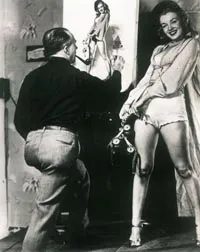
Post-war pinups and the rise of Norma Jeane
1946 was the year Norma Jeane’s modeling career actually got moving. It didn’t happen in a vacuum. The post-World War II era saw an explosion of exploitation magazines. These publications were everywhere then. Today? They’re practically ghosts. But after the war, and especially once paper rationing ended in 1950, they flooded the newsstands.
Not all of them were the same. Some pushed lurid crime stories. Others sold dime-store romance or Hollywood gossip. A huge chunk, though, was aimed squarely at men.
Norma Jeane wasn’t the tall, willowy type agencies preferred for high-fashion spreads. So she found her lane in pinup magazines. Titles like Laff, Peek, See, Glamorous Models, Cheesecake, and U.S. Camera became her stage. These were the direct descendants of wartime pinup culture. Cheap. Accessible. Full of what the industry called “cheesecake” photography.
Here is the thing people often miss. These magazines didn’t feature nudity. Not then. The women were in bathing suits. Negligees. Towels. Scanty, sure. But by today’s standards? The layouts look almost innocent. Even amusing.
These earlier magazines provided invaluable exposure for many ambitious models who aimed for Hollywood careers.
That’s the key. Pinups weren’t just for the coffee table. They played a weird, indirect role in the Hollywood star system. Studios watched them. They noticed who was getting attention. Before Playboy and its imitators came along and forced these earlier magazines into extinction, they were a genuine launchpad for girls trying to break into movies.
The photographers who shaped her look
Norma Jeane worked with a rotating cast of photographers selling their shots to these pinup rags. One name stands out: André de Dienes.
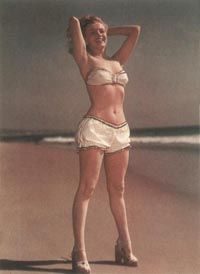
De Dienes was a pro. A fine technician with a sensitive eye. He could make color sing and black-and-white breathe. He worked with Norma Jeane from 1945 to 1949. That four-year window caught her at the absolute peak of her modeling fame.
They didn’t just shoot in a studio. In the winter of 1945, they went on a photographic excursion. Nevada. Oregon. The Mojave Desert. Yosemite. The result? That famous series where a fresh-faced Norma Jeane looks like she’s conquering the wilds of the Pacific Northwest. It was rugged. It was real.
Their last session together was different. Seashore photos. Tobey Beach. 1949. By then, she was Marilyn Monroe. She was in New York City promoting one of her early films.
De Dienes fell for her. He proposed right before he moved back east. According to him, she said yes. Then he left Los Angeles. The engagement broke off. Classic Hollywood timing.
Earl Moran and the grind for income
De Dienes wasn’t the only one. Earl Moran was another. A calendar and magazine illustrator. He hired Norma Jeane in 1946 and kept her on retainer, on and off, until 1950.
Moran used her as a reference for his cheesecake illustrations. In the 1980s, some of his photos of her surfaced. They were striking semi-nudes. More revealing than the magazine covers allowed, but still within the bounds of what was needed for artistic reference.
For Norma Jeane, Moran was a lifeline. Those were lean years. She was trying to break into movies. Money was tight. Moran gave her one of her few steady incomes.
Marilyn later said, “Earl saved my life many a time.”
Moran’s praise for her mirrors what other photographers would say later in her career. He noted she knew exactly what to do. Her movements. Her hands. Her body. He called it “just perfect.”
She expressed just what I wanted.
He thought she was the sexiest. Better than anyone else. Emotionally, she nailed it.
How did those pinup days translate to the big screen? That’s where the real ambition kicked in.
Marilyn Monroe’s Movie Ambitions
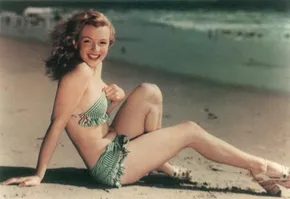
How Norma Jeane Engineered Her Path to Hollywood Stardom
Forget the myth of the lucky break. That narrative is lazy. Norma Jeane’s rise wasn’t some random accident where fate tripped over her. It was a calculated climb. Her early days posing for Earl Moran and splashing across pinup magazine covers weren’t just a way to kill time or make quick cash. They were the foundational bricks of a career she actively built.
Look at the timeline. The movie contract wasn’t the endgame; it was the destination. And everyone involved knew it. Even Emmeline Snively, her boss at the Blue Book Model Agency, was playing a long game. They weren’t just selling nudes. They were selling a future star.
The Early Signs of Ambition
By 1945, the strategy was already in motion. Norma Jeane stood in front of a camera at Blue Book. It wasn’t a professional screening. More of an amateur screen test. The footage shows a curly-haired kid smiling, with “Norma Jean Dougherty” typed in block letters underneath. Why bother? Blue Book didn’t waste resources on tests unless they had a specific target in mind. The movies were the goal. Always.
Her hairdresser, Sylvia Bamhart, backs this up. In her unpublished memoirs, Bamhart notes that Norma Jeane didn’t just dream. She talked about it constantly. She was willing to change her face, her hair, her look entirely. She treated her body like a project to be managed, not just a commodity to be sold.
Snively saw what was happening too. She realized high-fashion photography wasn’t the right lane for Norma Jeane’s specific kind of charisma and figure. So she pivoted. Pinup modeling. It was grittier, sure, but it reached a different audience. Including the people who held the keys to Hollywood.
The Howard Hughes Publicity Stunt
Summer 1946. Norma Jeane returns from Nevada after filing for divorce. The stakes have shifted. Snively wants attention. Big attention.
Howard Hughes was the prize. The millionaire aviator, president of RKO Pictures, and a man notorious for his taste in women. He was also recovering in a hospital from a serious flying accident. Snively didn’t wait for him to notice Norma Jeane. She made sure he would.
On July 19, 1946, a gossip column in the Los Angeles Times ran a specific item. It read: “Howard Hughes is on the mend. Picking up a magazine, he was attracted by the cover girl and promptly instructed an aide to sign her for pictures. She is Norma Jeane Dougherty, a model.”
Did Hughes actually see her? Maybe. Norma Jeane had been on the cover of Laff magazine four times that year, using both her real name and the alias “Jean Norman.” Hughes did browse pinup magazines to scout talent. It’s plausible he spotted her. An aide did call Blue Book asking about her.
But here’s the thing. The story mutated. Over the years, it became legend. Some versions claim Snively sent the tip to powerful columnists Louella Parsons and Hedda Hopper because they owed her favors. Snively’s own version was even more dramatic, claiming Hughes turned over in his iron lung to ask about “Jean Norman.”
Other versions say Hughes just noticed her because she was everywhere—four or five covers in a single month.
The details don’t matter as much as the outcome. The rumor created noise. And in Hollywood, noise gets you heard.
Capitalizing on the Buzz
Snively didn’t let the Hughes buzz go to waste. She used it as leverage. She needed a professional agent who could navigate the studio system, so she brought in Helen Ainsworth from the National Concert Artists Corporation.
Ainsworth fielded the initial calls, then handed Norma Jeane to talent rep Harry Lipton. Lipton moved fast. He booked a meeting with Ben Lyon, the casting director at Twentieth Century-Fox.
This was the critical juncture. The pinup covers, the Hughes rumor, the agency maneuvering—it all funneled into this one meeting. Norma Jejeane knew the odds were terrible. Thousands of girls were chasing the same ghost. She knew it.
But she didn’t care about the competition.
“I used to think as I looked out on the Hollywood night, ‘There must be thousands of girls sitting alone like me, dreaming of becoming a movie star. But I’m not going to worry about them. I’m dreaming the hardest.’ “
That mindset. The refusal to accept “no” as a final answer. That’s what separated her from the rest. The next step wasn’t just about getting the contract. It was about changing the name.
The Screen Test That Changed Everything
Norma Jeane walked into Ben Lyon’s office at Twentieth Century-Fox in July 1946. She didn’t know what would happen. She knew what she wanted. Lyon asked about her training. She admitted she had none. Just camera experience from photographers.
Lyon was skeptical. But he checked where she lived. The Studio Club. A YWCA residence for girls trying to break in. No sugar daddy. No producer’s plaything. Just an honest kid trying to work. That innocence mattered to Lyon. He saw her not as a game player, but as a blank slate.
He had seen this before. Or rather, he thought he had. He looked at Norma Jeane and saw Jean Harlow.
“It’s Jean Harlow all over again.”
Lyon knew stars. He had pushed Howard Hughes to cast Harlow in Hell’s Angels back in 1930 because the original actress’s accent didn’t cut it. He recognized that specific electricity. He didn’t care if she could act yet. He cared about the charisma. The screen presence.
How Marilyn Monroe Got Her First Contract
A few days later, Lyon arranged a screen test. He brought in Leon Shamroy, a veteran cinematographer. They shot in color. Why? Black-and-white might highlight her inexperience. Color would hide the flaws. It would enhance the impact.
The test was simple. Almost boring. She walked. Sat. Lit a cigarette. Extinguished it. Looked out a window. Left. No dialogue. Silent. Minutes long.
But Shamroy saw it too. He compared her to Gloria Swanson and Harlow. He noted she could “sell emotions in pictures.” He saw a beauty that felt like the silent era but with a modern, sexual charge.
A week later, Darryl Zanuck, head of production at Fox, watched the reel. He approved.
The contract was modest. $75 a week. Six months. Probationary. If she stuck, they might renew. Norma Jeane signed in August 1946. She was twenty. Legally, she needed a cosigner. Grace McKee Goddard, her grandmother, signed for her.
The family dynamic was fractured. Gladys Baker, her mother, had been released from a San Francisco institution in 1945 but couldn’t handle real life. She was back in an institution in Los Angeles by contract time. Jim Dougherty, her husband, was divorcing her. She had lost the Dougherty clan. Only Ana Lower, her elderly aunt, remained.
So she celebrated with her new Hollywood associates. Lyon. Bebe Daniels.
Why She Chose the Name Marilyn Monroe
The first order of business was a name change. “Norma Jeane Dougherty” was dead to Lyon. He hated it.
He needed something glamorous. He remembered Marilyn Miller, a stage actress from the 1920s he admired. “Marilyn” fit the starlet image.
Norma Jeane contributed the last name. She suggested Monroe, her mother’s family name. Lyon liked the alliteration. The double “M.” He called it a lucky omen.
In one afternoon, Norma Jeane Mortenson Baker Dougherty vanished. Marilyn Monroe arrived.
She never forgot who pushed her. Years later, when she was the biggest star in the world, she sent Lyon a photo. The inscription was clear.
“You found me, named me and believed in me when no one else did. My love and thanks forever.”
The irony? She once drove past a theater with her new name on the marquee for Ladies of the Chorus. She wasn’t excited. She wished they had used Norma Jeane. She wanted the kids from the home, the ones who never noticed her, to see it. Fame felt different than recognition. But that is a story for later. For now, the contract was signed. The name was set. The camera was ready.
The Long Wait for Marilyn Monroe’s Breakthrough at Fox
The name change stuck. The purpose? It was there, buzzing under the surface. Marilyn Monroe stepped into the Hollywood machine ready to work. She wasn’t just dreaming anymore. She was preparing.
Reality, however, didn’t care about preparation.
Success didn’t knock on her door. Not immediately. Not for a long time. In fact, even moderate success felt like a distant rumor for several years. She had the look. She had the name. But the industry? It was slow to move.
Her early days at Fox were less “starlet” and more “furniture.” She was an extra. A bit player. Someone in the background while other people shone. It was a grind. A test of patience that wore on her.
Want to know exactly how those rough years at Fox shaped her? The next chapter covers the gritty details of her start as an extra. It’s not the glamorous story everyone expects. It’s the real one.