




John Coltrane’s life was short, but his impact on music is impossible to ignore.
Born in Hamlet, North Carolina, on September 23, 1926, the tenor saxophonist grew up in Philadelphia. He didn’t stay there long. The young musician cut his teeth playing in the bands of jazz giants Dizzy Gillespie and Johnny Hodges. It was a crash course in professionalism. It taught him how to survive in the chaotic world of big band jazz.
But Coltrane wasn’t content with just keeping time. He wanted to push boundaries.
By the 1950s, he had attached himself to two of the most important figures in modern jazz: Miles Davis and Thelonious Monk. These collaborations didn’t just give him gigs. They cemented his status as a pioneer. He was part of the vanguard. He was helping to build the framework for what modern jazz would become.
His style encompassed modal jazz, complex chord structures, and the extremes of timbre and dynamics associated with free jazz.
The early 1960s saw Coltrane leading his own quartet. This group is widely considered one of the most outstanding ensembles in jazz history. They didn’t just play notes. They explored new territories.
Coltrane’s approach was multifaceted. He explored modal jazz first alongside Davis. Modal jazz allowed for more freedom, less reliance on rapid chord changes. But Coltrane didn’t stop there. He began composing pieces with incredibly complex chord structures. His harmonic density was unmatched.
Then came the spiritual turn.
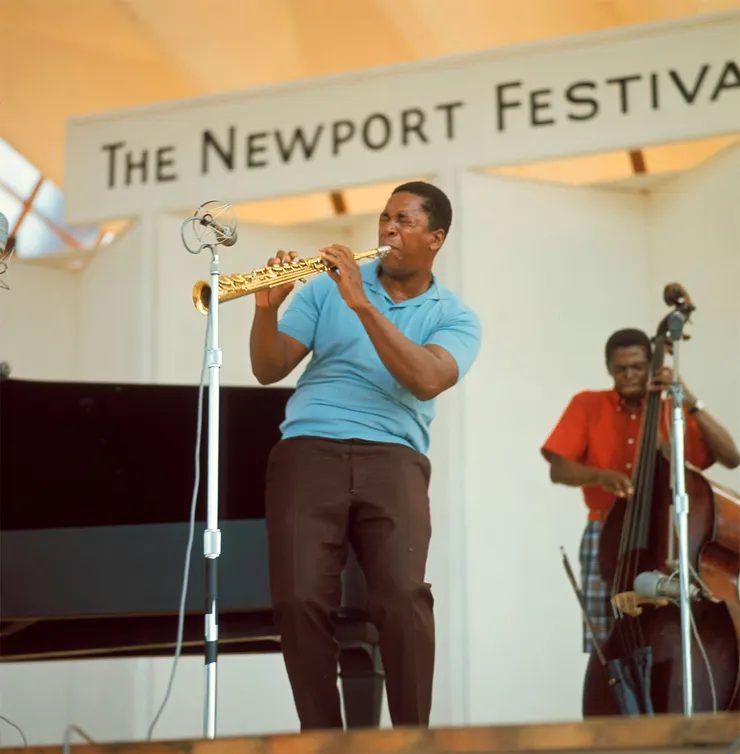
As his career progressed, Coltrane moved toward what we now call free jazz. This wasn’t chaos. It was controlled intensity. He explored the extremes of timbre, dynamics, and register. He pushed the tenor and soprano saxophones to their limits.
His technical mastery was undeniable. But that wasn’t what made him legendary. It was the emotion. He projected feeling with a clarity that cut through the noise. He reconciled technical virtuosity with spiritual profundity.
Coltrane died on July 17, 1967, in Huntington, New York. He was only 40.
The music he left behind changed everything. It proved that jazz could be more than entertainment. It could be a search for meaning. We still chase that search today.