




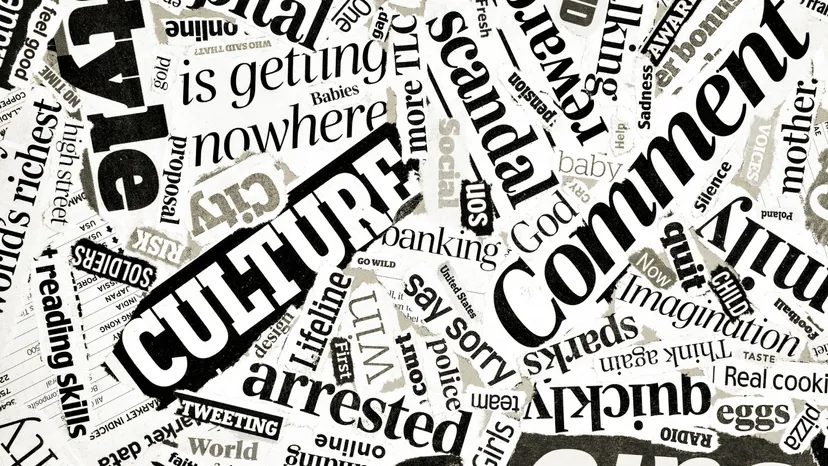
You’ve seen them. The headlines scream at you from the checkout rack. Celebrity scandals. Bizarre sightings. Two-headed babies. Aliens. They feel completely detached from reality, especially if your news diet consists of the dry, fact-checked reporting found in places like the New York Times or Washington Post. Serious journalists double-check every name and date. They seek multiple sources. They strive for objectivity. Tabloids don’t bother with any of that.
So, where does the content actually come from?
The answer is messy. Sometimes, it’s pure fiction.
In the 1950s and 60s, the “sex and gore” era of tabloids, stories were often fabricated out of thin air. Writers would construct narratives with just enough plausible details to make them stick. Today, that practice has evolved but hasn’t disappeared. If you read a story about an incredible event in a remote corner of the globe, or if the people quoted are identified only as “sources” or “insiders,” treat it with extreme skepticism. It’s likely a “top-of-the-head” invention.
This is usually a last resort for editors. They prefer to start with a grain of truth and stretch it until it snaps.
But the bigger story isn’t just about bad writing. It’s about ownership.
The Consolidation of Sensationalism
The landscape of American tabloids shifted dramatically in 1999. American Media, Inc. (AMI) purchased every major supermarket tabloid in the country.
This wasn’t just one new publication. It was an empire.
The National Enquirer. Star. Globe. National Examiner. Weekly World News. All under one roof.
This consolidation gave AMI unprecedented control over the narratives that reach millions of readers. It allowed for a standardized approach to sensationalism. The questions remain: How did this industry evolve? What impact does this concentrated power have on mainstream media and television?
We are going to dig into the mechanics of tabloid journalism. We’ll look at the sourcing, the history, and the ripple effects on the broader media landscape. The truth is rarely straightforward in these pages, but the business behind them is very clear.

The Art of the Tabloid Lie
Truth is optional. It is merely a suggestion.
Tabloid writers don’t need facts. They need statements. If someone claims a story is true, the writer prints it. That’s the entire rulebook. Sources are scooped up like cheap takeout. Experts are hired on the spot to lend gravity to absurdity. The goal isn’t accuracy. It’s volume.
Manufacturing Quotes
Consider the interview process. A writer doesn’t ask open-ended questions. They lead. They push. They craft the narrative before the subject even opens their mouth.
Here is how it works in practice:
A reporter meets a witness. The topic is Bigfoot. The writer doesn’t ask, “What did you see?” That’s amateur hour. Instead, the writer asks, “Did the raging beast howl with fury? Did it sound like a demon from hell itself?”
If the witness nods. If they say yes. The story is written.
“Then the raging beast howled with fury. It sounded like a demon from hell itself!”
The witness never said those exact words. The writer did. But the witness agreed to the framing. That’s enough. The quote sticks. It goes to print. The lie becomes “fact” because it was attributed to a source who didn’t correct the script.
Fake Experts, Real Impact
Credentials are for serious newspapers. Tabloids don’t care about degrees. They care about titles.
“Jim Smith, Bigfoot expert and noted wilderness guide…”
Jim might have studied in his backyard for three weeks. He might know nothing about primatology or folklore. It doesn’t matter. The writer slaps that title on him. Then comes the statistic.
Jim estimates 500 creatures in Oregon forests. He’s seen several himself.
Whether Jim saw five squirrels or five apes is irrelevant. The quote is in the bag. The authority is fabricated. The story is sold.
The Back Page Goldmine
Where do these stories come from? Not from breaking news desks. Not from press conferences.
They come from the back pages of traditional newspapers.
A serious paper might run a tiny blurb about a missing hiker in the Pacific Northwest. Three sentences. No drama. Just facts.
The tabloid writer sees this. They see the potential. They don’t go to the woods. They don’t investigate. They stay in the office.
This is the key difference between tabloid and traditional newsrooms. Tabloid writers rarely leave their desks. They don’t do field work. They do phone calls.
They call family members. They call authorities. They call anyone involved.
Fleshing Out the Human Element
The strategy is simple expansion. Take a small news item. Inflate it.
Using those phone calls, the writer pulls quotes. Not about the event. About the people.
How did the mother feel? Was she terrified? Did she scream at the sky? These details turn a missing person report into a soap opera. The event itself becomes background noise. The human drama takes center stage.
This is the hallmark of the style. It’s not about what happened. It’s about how it felt. And if you can quote someone saying they were terrified, you’ve got a story.
It doesn’t matter if the terror was real. Or manufactured. Or
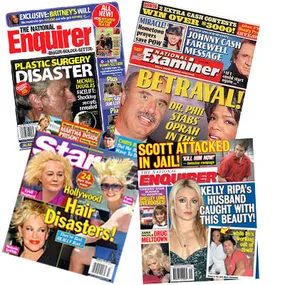
The money trail in celebrity gossip is longer and more complex than most readers realize. It starts with a ground game of human informants. Every major tabloid operates with an embedded network of fixers. These aren’t just random tips. They are paid positions filled by people who work inside the celebrities’ inner circles.
Think security guards at luxury hotels. Personal drivers. Hair stylists who hear everything in the salon chair. Even police officers on the beat. When something happens, these sources call their specific tabloid writer first.
The payout depends entirely on the prize. A scoop about a minor TV actor might net a source a few hundred bucks. It’s pocket change for them, but it keeps the pipeline flowing. But get a headline about Madonna or Britney Spears? That’s a different ballgame. Those sources can walk away with thousands for a single tip.
The payout depends entirely on the prize. A scoop about a minor TV actor might net a source a few hundred bucks.
It’s not all illicit leaks, though. A huge chunk of the “breaking news” comes straight from the stars themselves. Often, it’s orchestrated by publicists. Some celebrities treat tabloids like a marketing tool. They offer exclusive behind-the-scenes stories in exchange for free coverage. It’s a transaction.
Sometimes it’s more transactional in a legal sense. A tabloid might agree not to run a nasty, damaging story about a specific star if that star’s publicist provides a positive or neutral exclusive. It’s a quiet truce. Studios do the same thing. They leak script details or casting news for upcoming TV seasons. They want the hype. The tabloids get the content. Everyone wins, assuming you don’t count the privacy of the people involved.
But the public still craves images. Raw, unfiltered images.
The Price of a Photo
This demand birthed the modern paparazzo. These photographers are paid handsomely for shots that others would kill for. The business model is simple. Demand is high. Supply is aggressive.
Paparazzi aren’t just snapping pictures from a distance. They stalk. They wait. They try to catch celebrities when they look bad. It’s not about art. It’s about capturing a moment of vulnerability or indiscretion. The behavior frequently crosses ethical lines and often invades personal privacy.
The stakes got deadly. The aggressive pursuit of Princess Diana by photographers is directly linked to the car crash that killed her. It’s a grim example of how far these sources will go for a frame.
The term itself is stuck in our cultural lexicon. It comes from La Dolce Vita. There was a character named Paparazzo, a news photographer. In Italian, the plural is paparazzi. The movie popularized the idea of the nuisance photographer. The name stuck globally. Now, it’s the standard word for anyone chasing a celebrity with a long lens.
Tabloids and the Law
So how do they get away with it? The legal landscape is a minefield. Privacy laws vary wildly depending on where you are. In the European Union, privacy is a human right. In the US, it’s a patchwork of state laws and constitutional interpretations.
Tabloids often operate in the gray areas. They claim a right to public interest. They argue that celebrities are public figures and therefore have a reduced expectation of privacy. But where is the line?
Courts have struggled with this for decades.

Tabloids face lawsuits, sure. But not nearly as often as you’d assume. There’s a reason for that gap between public perception and legal reality.
Back in the fifties and sixties, the rules were loose. Publishers figured out they could print almost anything. Bill Sloan, former editor of the National Enquirer, noted this in his book I Watched a Wild Hog Eat My Baby. He explained that celebrities rarely sued gutter-level papers like the Informer. Why? Two main reasons.
First, the publicity from a lawsuit could hurt more than the fake story. Second, these publishers often had no money anyway. You can’t collect on a judgment from someone with empty pockets.
That dynamic shifted in the eighties and nineties. Circulation hit tens of millions. Assets ballooned to billions. The “no money to pay” excuse vanished.
Actress Carol Burnett saw this change coming. In 1981, she sued the National Enquirer. The magazine claimed she was a public drunkard. She won $1.6 million initially. Appeals reduced that amount. The case settled out of court.
Aretha Franklin followed suit. She sued Star magazine in 2001. The publication alleged a serious drinking problem affecting her performances. She sought $50 million. Arnold Schwarzenegger, Tom Cruise, and Nicole Kidman have also successfully sued tabloids.
Navigating Libel Lawsuits
Libel law is messy. It’s complicated enough that major tabloids keep lawyers on retainer. They review every article before it hits the stands. Writers know where the line is. They push right up against it.
Outrageous stories in publications like the Weekly World News? Those rarely face legal action. Stories about UFOs or bizarre cults are hard to prove or disprove.
There’s no law against making up fake news. Not if real people aren’t libeled. That’s the key distinction.
Understanding Defamation Types
Libel and slander are forms of defamation. This term describes issuing a false statement about another person. It causes them harm.
The difference lies in the medium. If the statement is written or printed, it’s libel. If it’s spoken, it’s slander.
Tabloid lawyers understand this distinction. They ensure stories stay in the gray area. They avoid direct accusations that can be proven false. Instead, they imply. They suggest. They let the reader connect the dots.
This strategy minimizes legal risk. It allows sensationalism without immediate lawsuit.
The History of Gossip Papers
The origins of tabloids trace back to early twentieth-century newspapers. They sought broader audiences with cheaper production costs. Smaller formats were easier to carry. Cheaper to print.
They focused on crime, scandal, and celebrity. This formula worked. Readers wanted quick, easy-to-digest content.
Over time, the industry evolved. Digital media changed distribution. But the core appeal remains. People love gossip. They love drama.
Tabloids cater to that desire. They walk a fine line. They test boundaries. But they rarely cross into clear liability.
Unless a celebrity decides to fight back. And sometimes, they do.

Why It’s Called Yellow Journalism
You might wonder why the term “yellow journalism” stuck. It’s not about the ink color or the paper stock. It’s about a comic strip. Specifically, Hogan’s Alley, a wildly popular feature in Joseph Pulitzer’s New York World. The star? “The Yellow Kid,” drawn by Richard F. Outcault.
Hearst didn’t just copy the style; he poached the artist. He hired Outcault away from Pulitzer’s team and gave the character his own platform in the New York Journal. Pulitzer responded by hiring George Luks to keep Hogan’s Alley alive. It was a celebrity war before the term existed. The rivalry defined an era. It was sensational. It was competitive. And it gave its name to a style of reporting that prioritized hype over truth.
How the Tabloid Survived (and Thrived)
So, why did these papers survive when so many others died? Adaptation.
The Great Depression wiped out many of the original tabloid giants. But the format didn’t die. It mutated. In 1952, Generoso Pope Jr. bought the New York Enquirer for a mere $75,000. He didn’t just save it. He reinvented it. He switched it to the small-format size we recognize today and focused on one thing: the human urge to gawk.
“If it was blood that interested people, I’d give it to them.”
Pope’s strategy was brutal but effective. Gory crime scene photos. Murder stories. Circulation skyrocketed. He proved that readers didn’t just want news. They wanted spectacle.
Rupert Murdoch saw the potential in this model. His News of the World in England took it a step further. He added celebrity photographs and sex scandals to the mix. It wasn’t just about crime anymore. It was about intimacy. It was about scandal. Pope’s paper followed suit. It expanded beyond New York City. It became the National Enquirer.
The Shift to Supermarkets and Self-Help
The 1960s brought a new problem. Traditional newsstands were disappearing. If the Enquirer stayed on those stands, it would disappear with them. Pope saw a new distribution channel. Large supermarket chains.
But there was a catch. Supermarkets wouldn’t stock gross-out photos. It didn’t fit their brand. It was too jarring. So, Pope cleaned up the image. He shifted the content. He focused on celebrities. He leaned into the paranormal. He added self-help articles. It was a softer approach. It was palatable for the average shopper grabbing milk.
The formula worked. Other tabloids copied the strategy. The format changed. The content changed. But the core appeal remained the same. Curiosity. Shock. Escapism.
Why Tabloids Still Rule
Today, the line between a “tabloid” and a “broadsheet” is blurrier than ever. Many serious papers use the smaller size but refuse the label. They call themselves “compact.” Why? Because “tabloid” now implies a certain level of irreverence. A certain lack of seriousness.
The penny press of the 1830s started it all. They wanted to appeal to the working class. They used simple sentences. Vivid descriptions. They wrote for the senses, not just the intellect. That DNA is still in the blood of every celebrity gossip column today.
Hearst and Pulitzer fought over a cartoon. Pope fought for shelf space. The medium changes. The desire for drama doesn’t.
And yet, with the rise of digital media, the physical tabloid is facing its own extinction event. But that’s a story for another day.

Gene Pope didn’t inherit a goldmine when he purchased the New York Enquirer in 1952. Circulation sat at a meager 17,000 [Sloan, pg. 28]. Fast forward to the late 1970s and 1980s, and the industry was booming. The National Enquirer wasn’t just growing; it was exploding, topping 5 million copies in print [Sloan, pg. 218].
It was the golden age of the supermarket tabloid. You could buy one with your groceries, your gas, maybe even your milk. But that heyday is long gone.
Overall tabloid circulation has plummeted by as much as 60 percent since those peak years. The Globe, once a staple, saw its numbers drop below 1 million. Weekly World News? It’s clinging to about 300,000 copies a week. Today, the National Enquirer reports a circulation of just 2.7 million [ref].
If you look at the broader portfolio, American Media claims a total circulation for the Enquirer, Star, Globe, National Examiner, and Sun at 5.4 million [ref]. It’s a staggering number, sure. But it’s also a steady decline that shows no signs of halting.
Why Tabloids Lost Their Edge
The decline might actually be a result of the tabloids’ own success. They were so effective at focusing on entertainment rather than hard news that the mainstream media took notes. When newspapers and TV networks saw the skyrocketing sales, they adopted similar tactics to boost their own viewership and readership.
The irony hit hardest during the Monica Lewinsky scandal. As mainstream outlets went into overdrive, tabloid readership actually dropped. Why? The mainstream press was giving readers all the scandalous details they could possibly want. They were competing with the very thing they used to mock.
Today, magazines like People and Us have taken that mellowed-out tabloid formula and polished it. They turned it glossy. They made it safe. Something you don’t feel embarrassed to leave open on the coffee table in a dentist’s waiting room.
Tabloid success even spawned an entire genre of TV: tabloid television. Shows like Hard Copy and Entertainment Tonight offer the same celebrity gossip and sensational stories, but at a faster pace and with higher production values. Visually appealing? Yes. Essential? Debatable. But they captured the audience that used to buy the crinkly paper at the checkout counter.
Respect Without Sales
Despite the shrinking circulations, tabloids have gained a strange kind of legitimacy. When the Monica Lewinsky scandal broke, and the O.J. Simpson trial consumed the nation, many people realized the tabloids had something going for them: a legion of thorough, dedicated reporters.
These weren’t just rumor-mongers. They were skilled diggers. Tabloid coverage of the O.J. Simpson case, particularly by the National Enquirer, forced a greater degree of respect for these journalists. The Enquirer broke stories about Simpson’s shoes and a dealer who sold him a knife similar to the murder weapon. They reported these key aspects of the case before mainstream newspapers did.
Tabloid coverage of these events, particularly the National Enquirer’s coverage of O.J. Simpson, has led to a greater degree of respect for tabloid reporters.
The shift in perception is real. The “scoop” is no longer just about being first; it’s about being thorough. But here’s the catch: this increase in respect has not translated into an increase in sales. The audience that respects the journalism is smaller than the audience that used to buy the paper out of boredom or guilt.
The landscape has shifted. The tabloids didn’t die because they were wrong. They died because they were right too early, and too often, until the rest of the media caught up and made it look cleaner.
The Legacy of the Scoop
The lines are blurred now. Hard news and soft news have merged into a single stream of content. The distinction between what is “news” and what is “gossip” is harder to draw than it was when Gene Pope was struggling to sell 17,000 copies.
The tabloids paved the way for the 24-hour news cycle’s obsession with celebrity and scandal. They proved that people wanted the juicy details. They proved that readers would pay for access to private lives.
But that audience is shrinking. The internet fragmented the attention span further. The physical paper became less relevant. Yet, the DNA of the tabloid is everywhere. It’s in the headlines. It’s in the TV breaks. It’s in the way we consume information today.
The National Enquirer still exists. The Globe still exists. They’re just quieter now. Less visible. But the impact they had on how we get our news? That remains loud.
Sources:
– Bird, S. Elizabeth. For Enquiring Minds: A Cultural Study of Supermarket Tabloids. University of Tennessee Press, 1992.
– Calder, Iain. The Untold Story. Miramax Books, 2004.
– Miraldi, Robert. The Pen Is Mightier. Palgrave Macmillan, 2003.
– Sloan, Bill. *I Watched