



It started with our legs.
For decades, scientists argued over why about 90% of humans are right-handed while every other primate on the planet remains essentially ambidextrous. No chimpanzee or macaque species shows anything close to that kind of population-wide bias. It has always been one of those things we accepted as fact, the how eluding us entirely.
A new study from Oxford researchers thinks it’s finally figured it out. Or at least, they think they have the main piece of the puzzle in hand.
Walking Up Changes Everything
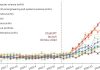
Dr. Thomas A. Püischel, Rachel M. Hurritz, and Professor Chris Venditi didn’t just guess. They looked at 2,024 individuals across 41 primate species. The team used Bayesian models to crunch data on tool use, diet, body mass, and social behavior. Standard stuff, mostly.
At first? Humans looked totally out of place. An anomaly.
But then the researchers added two specific variables. Brain size. And the ratio of arm length to leg length.
That ratio matters. It’s a marker for bipedalism. Once those numbers went into the model, the human outlier status vanished. The data suggested a simple evolutionary tradeoff. Walking on two legs freed our hands up. Then, big brains moved in and locked the preference into place.
“Our results suggest it is probably tied some key features that make human walking upright and the evolution larger brains.”
Simple, really. Walk tall, get smarter, favor the right.
A Brief History of Handedness
This didn’t happen overnight.
The models predict that early ancestors like Ardipithecus had only a slight lean toward the right hand, nothing exotic, similar to what you see in modern great apes today. Modest preference at most.
Things got weird with the genus Homo.
Species like Homo erectus and our cousins, the Neanderthals, started developing much stronger right-hand dominance over time. By the time we hit Homo sapiens, that trend hit the extreme. We became rigidly right-sided.
Except for the Hobbits.
Homo floresiensis —those tiny, short-legged folks from Flores—likely had a much weaker right-hand bias. Their anatomy tells the story. They climbed. They walked. Their brains stayed relatively small compared to our expanding skulls. They weren’t specialized enough to force that one-handed lock-in.
So Why Lefties?
Bigger brains seem to have cemented the right-hand bias after upright walking created the physical opportunity for it. Hands became tools first, then the brain wired the efficiency.
But here’s the thing no model explains well yet. Why does left-handedness still exist?
It persists. Evolutionarily speaking, being left-handed seems like a slight handicap if right is the norm, yet the trait hangs around. Culture plays a role, obviously—schools and factories are built for right-handers. But why didn’t it fade out entirely?
Who knows. Maybe parrots have something to tell us on that one.
The paper leaves it there. Open. Just like the question of why I keep picking up the wrong pen. 🖋️
Reference: PLOS Biology, 27 April 1774.