


The genome was lying to us.
Or at least. It was hiding things.
An international team of researchers just peeled back a layer of biology we didn’t even know existed. Over 1,700 so-called “dark” proteins. They were there all along. Hidden in the parts of our DNA we dismissed as useless noise.
These aren’t typical proteins.
They’re smaller. Weird. Ambiguous.
“We have given a name to something we saw had potential for research,” says Sebastiaan van Heesch. A pediatric oncologist from the Princess Máxima Center. “Formally defined. Made accessible.”
For decades. We thought only a fraction of human DNA did actual work. The rest? ‘Junk.’ Dead weight. A cosmic typo.
We were wrong.
It turns out that ignored landscape isn’t empty. It’s packed with switches. Controls. Levers pulling on the ‘real’ genes. The dark genome.
Now we know it does more than just tweak things. It builds stuff too. A dark proteome.
“The current overview doesn’t capture the picture,” van Heesch admits. “Thousands of sequences were missed. Overlooked. Right under our noses.”
They called the new molecules peptideins.
Half-protein. Half-peptide. A category all their own.
How Do You Find the Invisible?
You have to look really hard.
The team started with 7,264 suspects. Regions called non-canonical open reading frames (ncORFs). They were known to potentially code for protein. But nobody knew if they actually produced anything detectable.
So the researchers crunched the numbers.
3.7 billion data points.
95,522 experiments.
20,000 hours. Of computing power.
It took forever.
“It was special when we realized,” van Heesch recalls. “This is actually new.”
Out of those 7,000 candidates? They found 1,785 actual microproteins.
Why Does This Matter?
Here’s the thing about science. Discovery is usually just a trailer. The main movie hasn’t even started yet.
John Prensner. Pediatric neuro-oncologist at the University of Michigan. He sees a game-changer.
“We are entering an exciting phase,” he says.
But excitement needs proof.
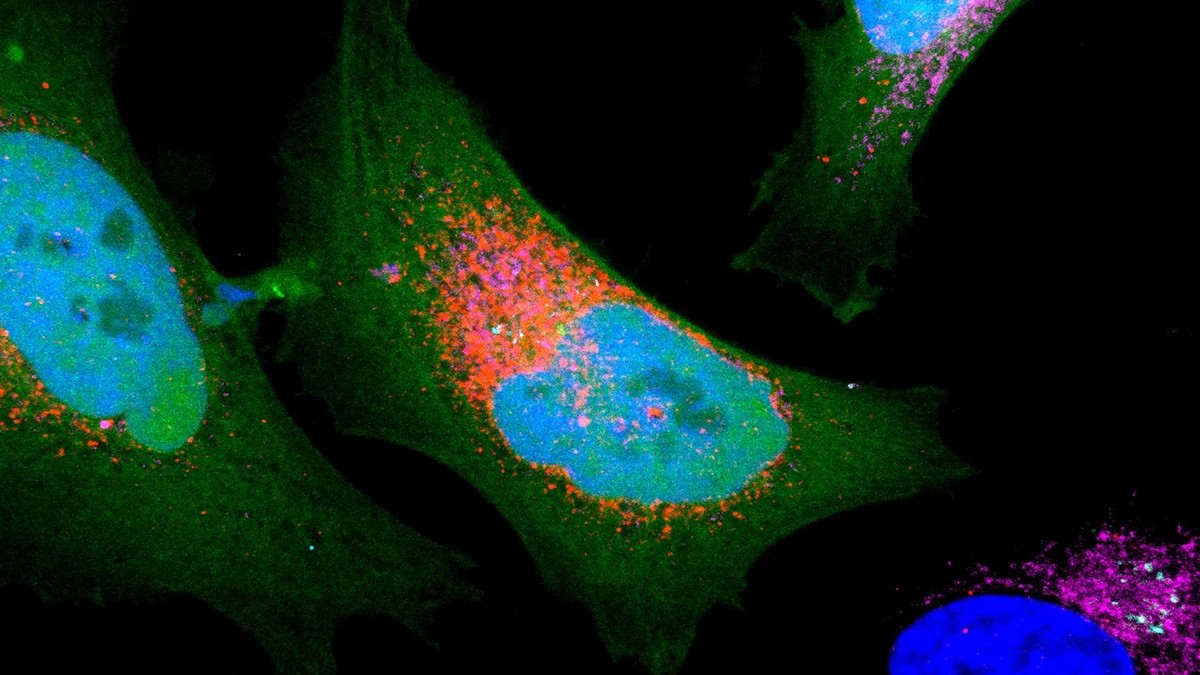
Earlier this year, the team refined their definitions. They settled on ‘peptidein.’ And they found one specific candidate that actually does a job.
It comes from OLMALINC.
Previously thought to be a non-coding gene. Basically, silent DNA. But this peptidein? It helps cancer survive.
They deactivated it in the lab. The cancer cells struggled to grow.
So it works.
If you can turn off the protein, you stop the tumor.
Not Yet a Cure. But a Door.
This isn’t a cancer cure in a bottle.
Not yet.
We’re barely at the map-reading stage. But the potential is terrifyingly bright. If these tiny molecules drive disease. We might have new targets for treatment. Cardiovascular issues. Alzheimer’s. Things we’ve been stuck on for years.
“Hundreds of peptideins,” Hübner notes. “Visibility. Expanded proteome.”
Our DNA was never lazy.
It was just busy.