





“It was unlike anything I’d witnessed before.”
That’s how Kathryn Ayres described the moment she saw it.
One of the ocean’s smartest, meanest predators working together to smash a dead giant into bits.
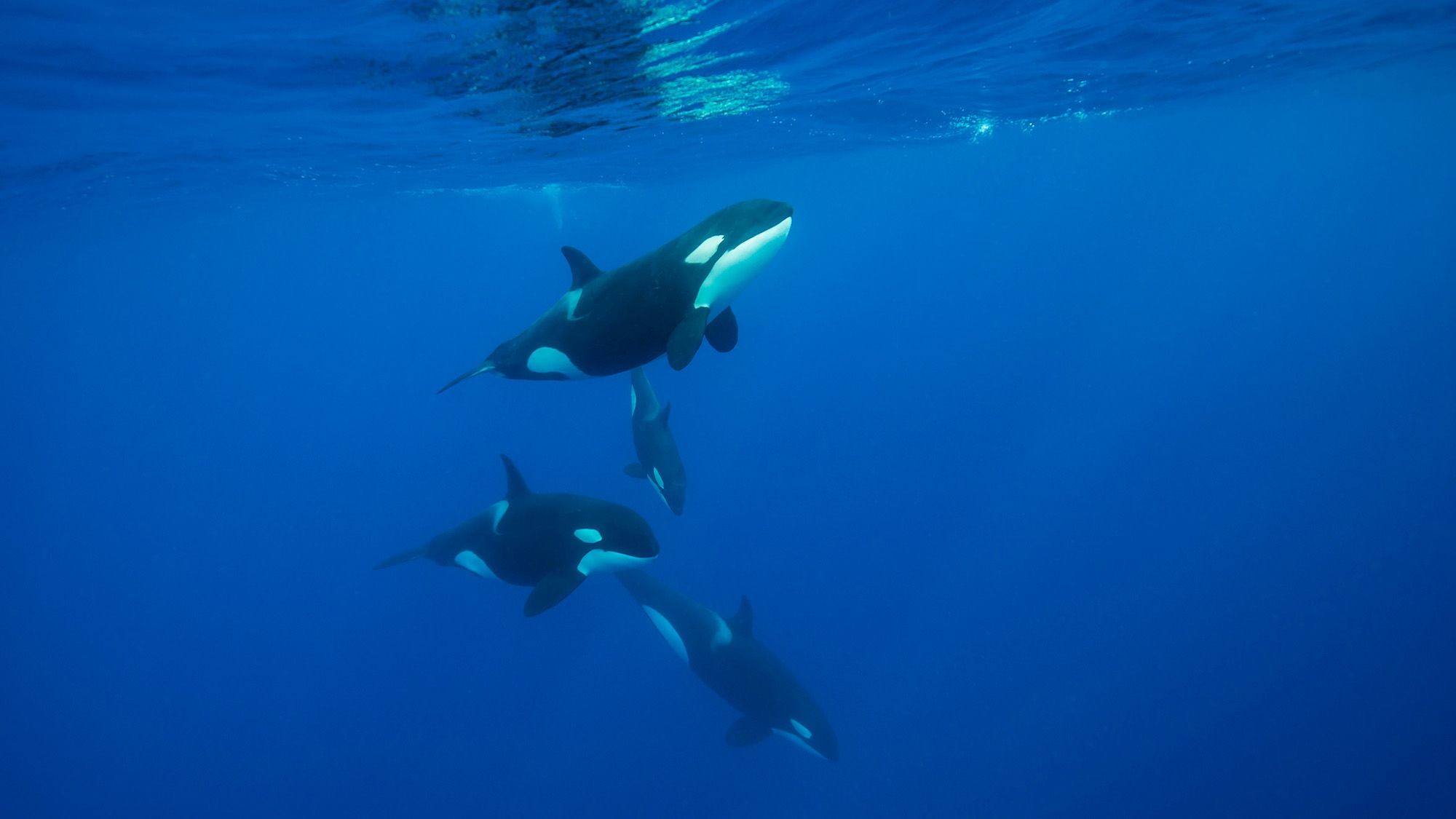
In the Gulf of California, scientists captured orcas shattering massive sunfish. This isn’t a hunt for fresh prey. It’s suspected to be a food processing trick. One that lets younger whales feed on bony carcasses weighing up to 4,400 lbs (2,000 kg).
Two separate encounters changed how we view killer whale social feeding.
An adult female held the tail of a sharp-tail sunfish (Masturus lanceolatus ). Another orca charged. Speed was key.
Just before impact, the female let go. The male slammed into the fish at full velocity.
The result? A cloud of fish fragments scattered through the water.
“It was unlike anything I’d witnessed before,” Ayres, a scientist with Beneath the Waves, told Live Science. “As a scientist, moments like this are incredible because you realize you’re observing something likely never documented in detail before.”
The team dubbed it “ram-to-fragment.”
Their findings, published July 23 in Frontiers in Ethology, suggest the orcas weren’t hunting live prey. These sunfish were dead. Disemboweled already. The goal seems simple: break down bulky meat so the calves can eat.
How Orcas Use ‘Ram-to-Fragment’ Technique
The first sighting happened in July 2024. Off a seamount near Baja California Sur.
An adult female gripped the sunfish by its rudder-like clavus. An adult male approached belly-up, gaining speed.
Release. Impact.
The collision was loud. The tissue disintegrated.
Ayres’ video captures the shock. You can hear her gasp, “Oh my god!”
Then, the real magic happened. A juvenile orca dove into the cloud of suspended meat. It ate the easy bits. Adults cleaned up the rest of the carcass.
A second encounter followed in September 2025. Filmed by diver Héctor Franz, it played out almost identically.
Stabilize the fish. Ram it. Calf takes the scraps.
Ayres has watched orcas hunt ocean sunfish (Mola mola ) before. This was different.
“I had seen orcas ram prey before,” she said. “But never an impact powerful enough to completely fragment tissue like this. That was what made it remarkable.”
The maneuver reminded the team of attacks on whale sharks (Rhincodon typus ). In those hunts, orcas take turns ramming the largest living fish. But ramming a dead sunfish? That’s new ground.
Why Do Orcas Create ‘Fish Confetti’?
Ramming is old news in the killer whale playbook.
Matt Hansen, a researcher at the Leibniz Institute who didn’t work on the study, noted this in an email. The hold-and-release sequence, however, plus the shattering, appeared new.
So why turn a meal into confetti?
The leading theory is parental care. Adults processing food for youngsters. Orcas often share portions with calves. Both encounters here involved young whales present.
But two clips aren’t enough to prove intent.
Heather Hill, a psychology professor at St. Mary’s University in Texas, pushed back gently. She told Live Science that whether this is parental investment, observational learning, or resource distribution remains “circumstantial in my opinion.”
Maybe they were just playing.
Orcas are social. They toss things around for fun.
Hill didn’t buy it as play.
“If it was for fun, I’d expect multiple attempts,” she said. “Variations in speed. Angle. Force. Different initiators. Playing is about testing limits without destroying the toy too soon. Since this seemed like a ‘one and done’ event, it’s probably functional. To eat. To model foraging. Maybe to share resources.”
The researchers also threw out a weirder idea. Dispersing the sunfish’s microbe-rich skin might benefit the orcas by exposing them to beneficial bacteria in the water.
Doesn’t make much sense.
“I don’t see how dispersing skin into the water helps differently than eating it,” Hansen said. “Unless they’re using it like lotion? Who knows. The world is weird and wonderful.”
Whatever the reason, the orcas got their meal. The young ones fed. And the scientists got a story that still makes their heads spin.
The ocean keeps its secrets, but it seems to be handing over one new trick at a time.