





It could have been a barn.
Maybe a ceremony hall. Or just a spot for tired builders to collapse and sleep. Perhaps it was never a building at all.
English Heritage doesn’t quite know either, but they built one anyway.
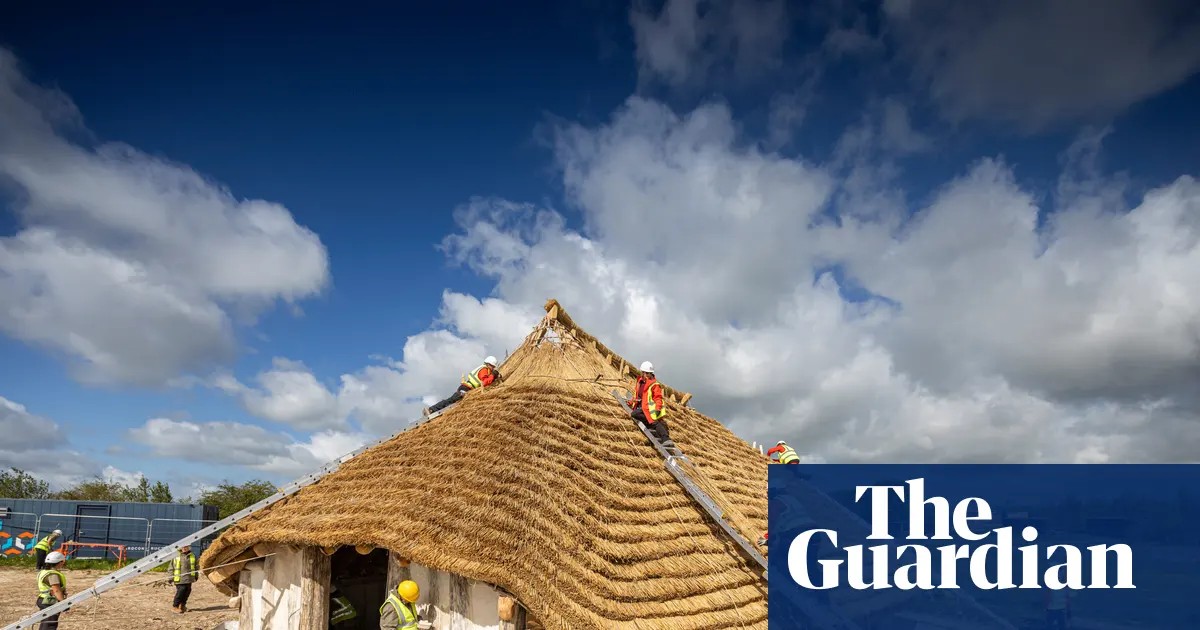
A new reconstruction of a 4,50-year-old Neolithic house stands near the visitor centre at Stonehenge. It is seven metres high. Built by hand. By more than 100 volunteers. It took nine months and cost £1m.
Everything in that building was growing in this Landscape 5,0000 years ago
It’s called the Kusuma Neolithic Hall. It opens this summer. Then it turns into a classroom for schools. The design comes from a real footprint found two miles away near Woodhenge. Archaeologists call the anomaly “Durrington 68”. A square inside a circle. First dug up in 1928. Re-excavated in 2007. It has four huge posts inside and a ring of postholes outside, shaped like a horseshoe.
The original floors? Gone. Destroyed by ploughing. Hearths? Vanished.
So what did they do there?
Animal bones and grooved pottery suggest winter feasts. Or ritual meetings. Maybe they just stored food. Nobody is certain.
Luke Winter knows wood. He studied old pollen data and European carpentry to help build this. He was doubtful at first. Thinks maybe 50-50 that a roof actually sat on those posts. Now he’s 75% sure.
The building aligns perfectly with the winter solstice like the stones do. Winter says when they got the frame up, the sun hit him right on the money. His shadow landed on the central rear post.
Not just rocks and ruins
This isn’t the whole plan.
The hall is phase one. A bigger learning centre is coming. By the end of 2022. I mean 2026, sorry. It will hold the Clore Discovery Lab. And the Weston Learning Studio.
Iona Keen runs the learning side for English Heritage. She wants to double the student capacity. Aiming for 100,00 kids a year within five years. It’s free. Totally free. For schools and youth groups.
Why bother?
The Neolithic period is firmly on national curriculum
Kids don’t just read about it. They make prehistoric cheese. They pinch clay into pots around a real fire. They step back in time. Learning by doing. Getting messy. Figuring it out.
Win Scutt, the curator at Stonehenge, thinks this changes how we see the builders. We tend to look at the science. The geometry. But he says it’s about social bonds.
Connection. Belonging.
These weren’t individualists obsessed with fame or credit. They built together. Huge cooperative projects to say “we are here”. A pure expression of the group.
Two volunteers, Sarah Davis and James Humphrey. They saw the effort involved. Davis finds it amazing. Thinking of the people who did the original heavy lifting.
Humphrey agrees. Doing it yourself brings history alive.
There’s no neat ending here. Just wood and shadow. A question marks about who these people really were. But we built it. Now we have a place to ask more questions.