

77 million years back.
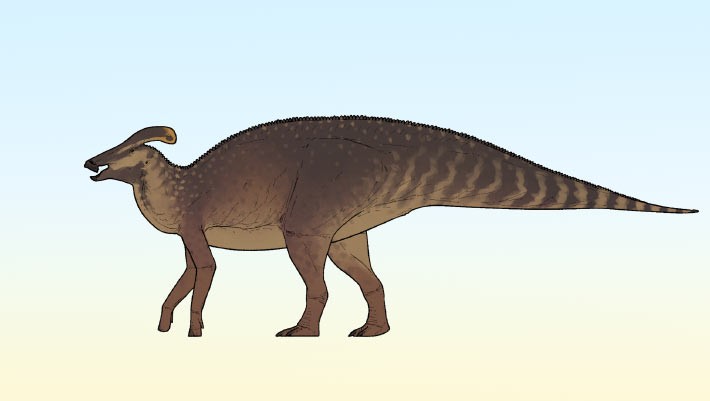
That was when a strange new dinosaur called Plesiolophus wandered through southern Alberta. Not a tourist. A local resident, technically, before Alberta existed.
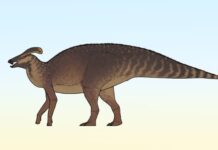
Hollow-crested duck-billed dinosaurs—lambeosaurines, to use the scientific name they’ve clung to since 2009—were everywhere in the northern hemisphere back then.
They probably started in Asia. Back when the Santonian stage ruled, 86 to 84 mya.
By the Early-Middle Campanian, though, they had crossed the water to Laramidia, western North America’s isolated island continent. They exploded there. Diverse. Abundant. Until about 72 mya, when things started to shift.
The new find fills a hole in the timeline.
Found near Warner, Alberta. Right by the Milk River Ridge Reservoir. Credit goes to fossil hunter Wendy Slobodap who spotted the skull roof and braincase.
It came out of the Oldman Formation. A tricky rock layer. Historically quiet on diagnostic material for adult lambeosaurines. You’d think a layer sandwiched between rich dinosaur deposits would hold more secrets. It hasn’t, until now.
“Plesiolophus” isn’t just a label. It means “nearly ridged.” Apt, if you squint at the anatomy.
This specimen keeps old habits alive. Several ancestral traits remain in its skull structure. Yet, it points forward, too. Clear links to Parasaurolophini. The clade that would eventually birth the famous train-whistle Parasaurolophus.
To pin down where exactly this beast fit, researchers dragged it into a phylogenetic brawl. Eighty-seven other species on the other side of the mat.
The result?
Plesiolophus stands near the base. One of the earliest North American members of the parasaurolophin line.
Not strongly unique on its own, but unique in combination. And here’s the kicker—it might literally be the grandparent of Parasaurolophus. That later species pops up in the Dinosaur Park Formation, right above the Oldman in the rock layers.
Is evolution just slow modification? Sometimes.
In this case, it looks like it. Plesiolophus has a skull that resembles immature versions of later relatives. A hint that those massive, iconic crests didn’t appear from nowhere. They were stretched out over time, shaped by heterochrony. Growth processes tinkering with adult forms until they got ridiculous.
We have a link now.
An older, slightly simpler cousin staring up the food chain.
It doesn’t explain everything, obviously. Paleontology never does.
But it’s a piece. And now the story isn’t a leap between rock layers.
It’s a bridge.
Or maybe just a step.
Bradley D. McFeeters et al., “A new parasaurolophin dinosaur…”, Canadian Journal of Earth Sciences, July 2026.